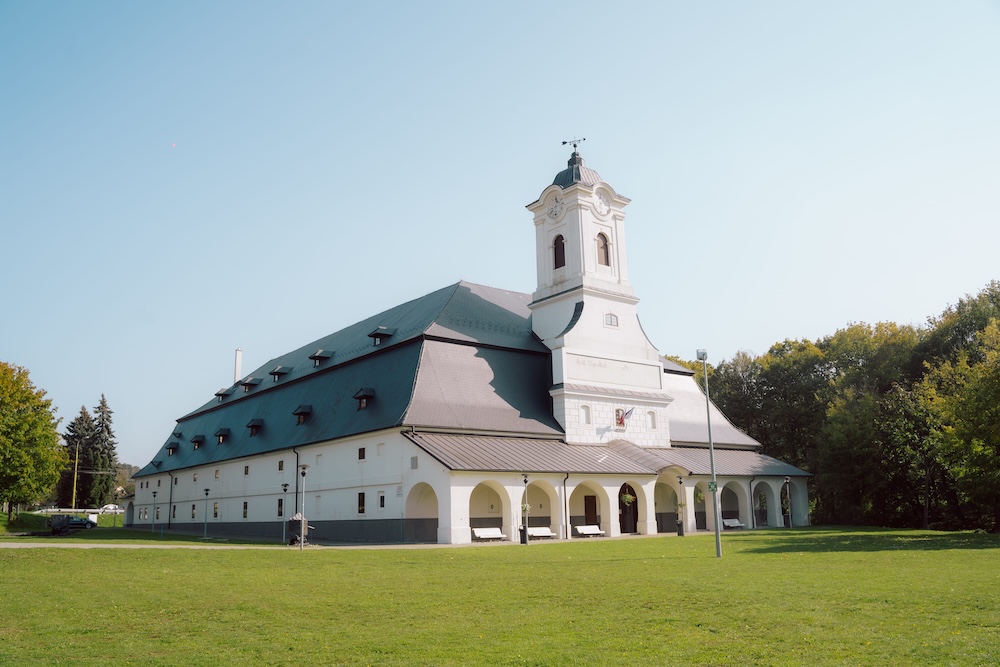

The village of Budimír is rich in cultural monuments. On a relatively small area there are five national cultural monuments - a younger manor house, an older manor house, a manor house, a statue of St. Florian and a historical park. There are also other interesting historical objects - the Romanesque church, the manor house, the chateau, the castle, the chapel, the chateau of the castle, the chateau of the chapel of the family. Catholic Church of the Exaltation of the Holy Cross, an old evangelical church, historical granaries and a granary house.
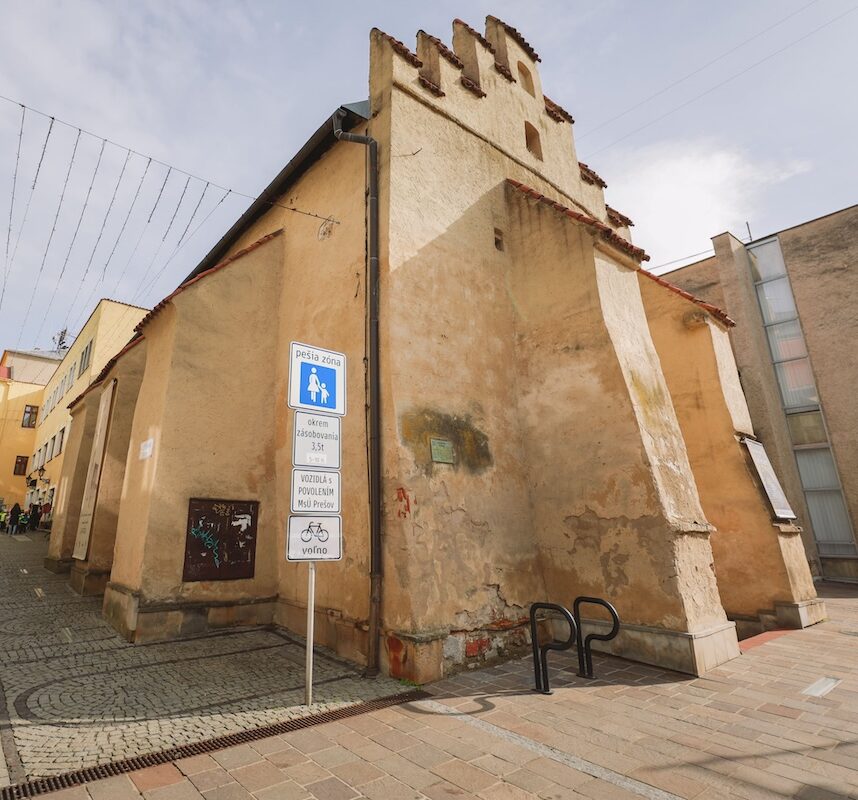
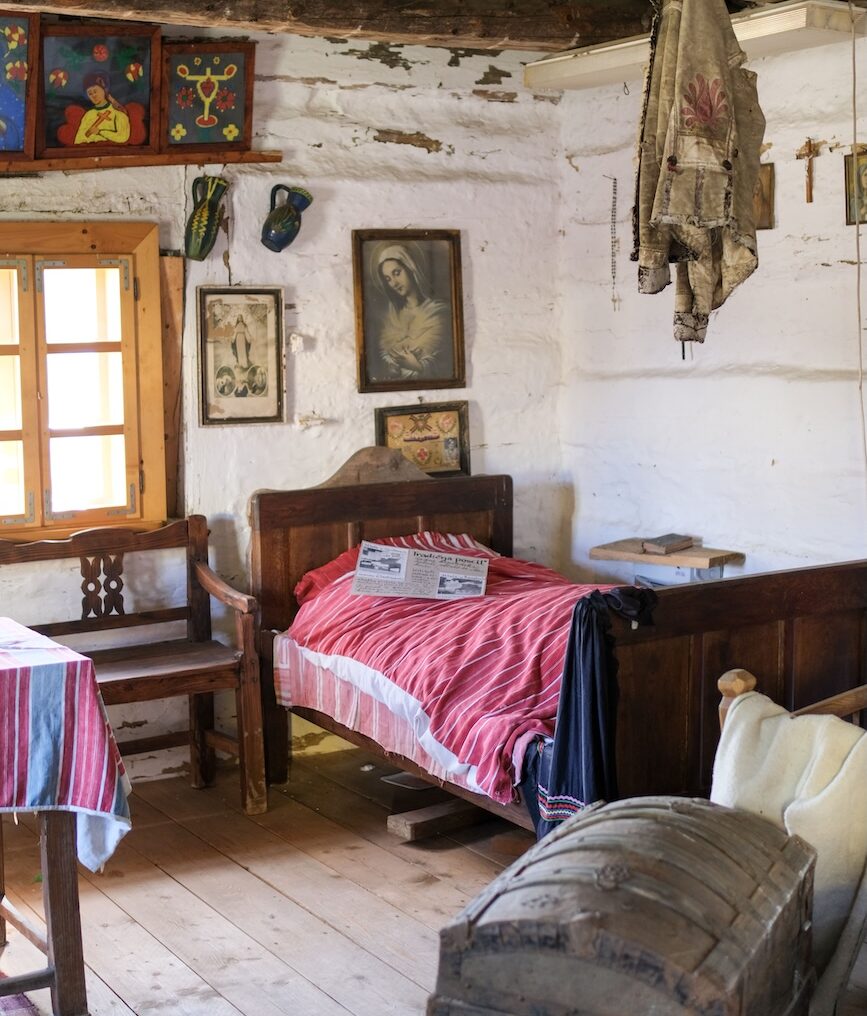
The Ironworker's House, this inconspicuous building next to the main road "furmanca" Košice - Prešov, dating from the 18th or 19th century. It is 200, 300, maybe even more years old. Who knows. There were no precise records of the construction, reconstruction or inheritance of such buildings, unlike manor (noble) residences. But the important thing is that the hut stands on its original place and almost in its original condition (except for the roof), without major modernization modifications, with original doors and windows, without electricity, gas, or water connections. Unique is the floor in the front room of the "front chiza", made of trampled clay smoothed with grease, consisting of a mixture of mud, chaff and cow's tallow, popularly known as "zapuśčana s kravenec" (cow's paunch). The attic is also covered with mud, where the thickness of the screed reaches up to 10 cm. The house has no solid foundations, it is built on split slate covered with dry gravel. The perimeter walls made of rough sandstone stones reinforced with mud (without the use of lime mortar) are not vertical - at the top, under the "tabernacle" they are 55 cm thick, at the bottom almost 70 cm, they are bricked "to the cone". The front façade and the edges of the shutters are decorated with the typical Budimir stucco ornamentation of "zigzag figures". The transverse roof over the "dašek" façade is covered with wooden shingles.
Although it does not seem so, the building is a manor house, of which there were still several in Budimir after World War II. Originally, they served as sublet flats for the families of the "komenziašoch" (seasonal workers), some of whom settled permanently in the village. Several families also lived in one house and had to deduct a certain number of days for renting a "quartel" in the men's house. The last permanent occupant of the house was Grandma Straka, born in 1908, who was widowed in 1958, and that is why nothing changed in the house for almost 50 years. She died in 1998 and since then the abandoned house has fallen into disrepair. In 2003, when the current owners bought it, it was already a structurally disturbed ruin with a leaking roof and a collapsed ceiling. The gradual repair of the house has been going on for about 10 years, exclusively by classical methods (by hand) without the use of modern technologies, energy and up-to-date building materials. The components that had to be replaced (rotting beams and boards) were replaced with construction timber from old houses, sheds and barns that had been demolished. In the interior of the house, in addition to period furnishings, there is also a collection of various farmer's tools and utensils - tows, pottery, trough products, horse harnesses, bells, weaving and blacksmithing products, etc.In addition to the house, the area of less than four acres of land, which is enclosed by a classic wooden "štachetkovi" fence, is also occupied by a courtyard, which contains a classic "well with a bucket", a shed containing a collection of agricultural tools, a "natoň" wood preparation room, an open "šmikňa" stove and, on the brier, a classic wooden "budar" latrine. On the inner corner of the courtyard, on its southern edge, there is a chapel with a sundial.
Source and photo: Municipality Budimír
Map
Gallery


Information
Tel: +421 (0)904 091 713, 0904 219 386 E-mail: zuzana.ksenzighova@gmail.com, info@obic.sk Web: www.obic.sk or Facebook page The Ironworker's House
Opening hours: Open 24 hours (by arrangement)