
Discover the atmosphere of life as our ancestors lived it in the open-air museum at Bardejovské Kúpele, which ranks amongst the most significant exhibitions of folk architecture in Slovakia. In the pleasant surroundings of the park, you can explore traditional wooden buildings, historic farm buildings, technical installations and religious monuments, which offer an insight into the everyday life of the Slovak and Rusyn populations of north-eastern Slovakia.
Exposition of folk architecture v Bardejovské Kúpele It was opened to the public as early as 1965. In organisational terms, it falls under the remit of Šariš Museum in Bardejov, where a visit will take you back in time to a village that shows how people used to live. Spanning an area of approximately 1.6 hectares, there are 31 historic buildings which create an authentic picture of a traditional village in the Upper Šariš and Northern Zemplín regions. Most of the buildings date from the 19th and 20th centuries, whilst the oldest structures date back to the first half of the 18th century.
You’ll find up to 31 properties here
Spanning an area of 1.5 hectares, the park and garden complex – the ethnopark – already features 31 objects - ranging from log houses to farm buildings, industrial structures and religious buildings. All are a testament to, and a beautiful reminder of, the folk culture and architectural traditions of two ethnic groups – the Slovak and Rusyn populations – living in the regions of Upper Šariš and northern Zemplín. They date from the 19th and 20th centuries and, typologically, belong to the Carpathian-style timber-framed buildings.
Traditional log houses and village life
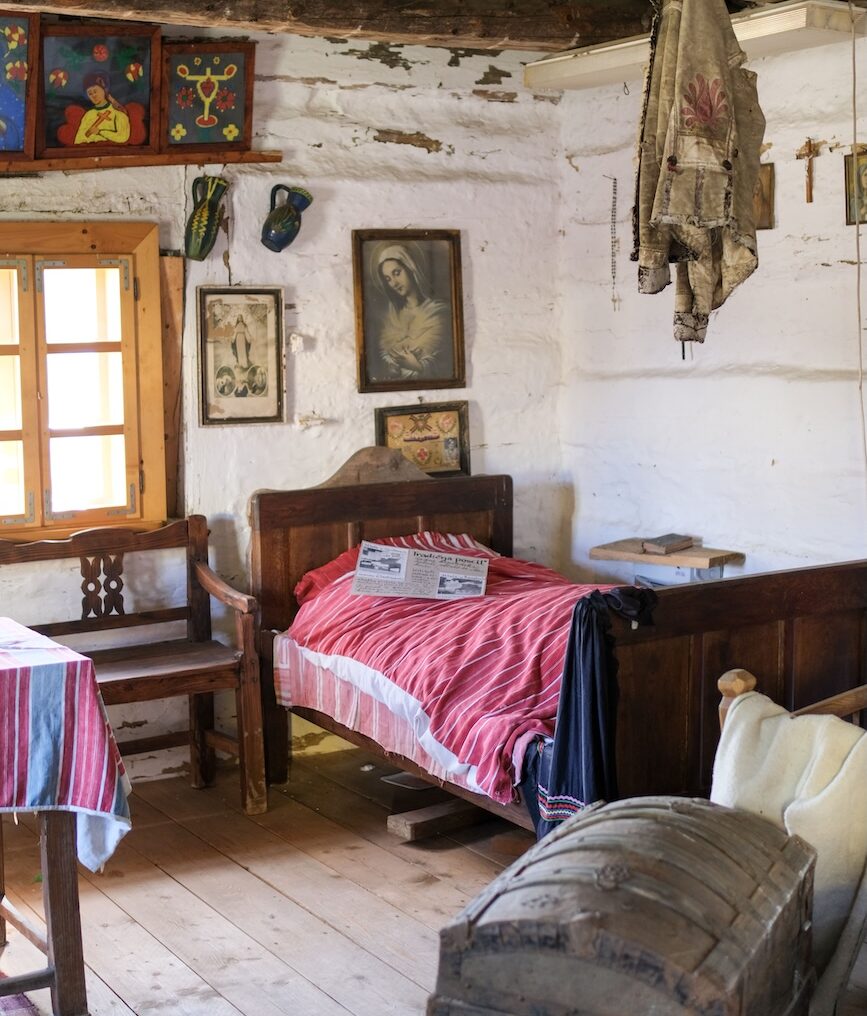
At the heart of the open-air museum are log-built residential houses, which show visitors how different sections of the rural population used to live. Here you will find, for example, the homes of poor farmers from Frička and Hrabová Roztoka, the house of a middle-class farmer from Petrová, and dwellings from Maľcovo and Kračúnovce.
The individual buildings are not simply empty historic structures. Their interiors are furnished with period furniture, tools and everyday objects, giving you an idea of what everyday life in the village was like decades or even centuries ago.
Farm buildings and traditional crafts
When visiting the open-air museum, you can also gain an insight into the world of traditional farming and crafts. The exhibition includes granaries, barns, a well, a fruit drying room, a pigsty or a blacksmith’s workshop. There is also an apiary with wooden hives, which includes a unique hive dating from 1691.
Technical artefacts form an interesting part of the collection. One particularly valuable exhibit is a historic, water-powered machine for manufacturing wooden water pipes. Also worthy of attention is the fulling mill from Livov, which was used for processing woollen fabric and producing cloth.
Wooden churches and religious monuments
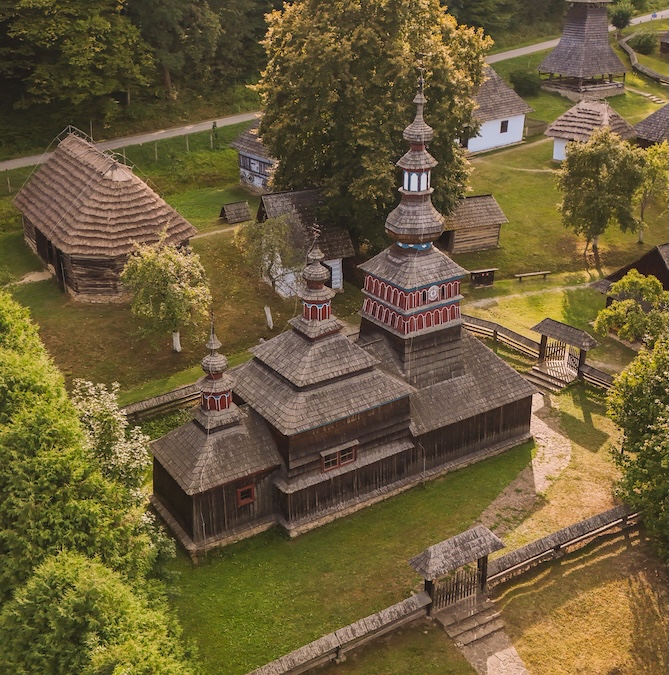
A key part of the exhibition is wooden sacral buildings, which reflect the region’s rich religious and cultural heritage. In the open-air museum, you can admire a small wooden Eastern Rite church from Zboj dating from 1766, a bell tower with a gate from Nižný Orlík, a bell tower from Nemcovce and the Chapel of St John of Nepomuk.
The following also attracts particular attention: Greek Catholic wooden church in Mikulášová, dating from 1730, which was renovated in 2005. Another small wooden church from Mikulášová is situated outside the open-air museum grounds, in Bardejovské Kúpele.
Experience history first-hand
Bardejovské Kúpele Open-Air Museum It is the ideal place for families with children, lovers of history and architecture, and anyone wishing to discover the region’s traditional culture whilst visiting Bardejov. A stroll amongst the timber-framed houses and historic buildings offers a delightful blend of discovery, relaxation and an opportunity to engage with the cultural heritage of the Šariš region.
Source: OOCR RŠ
Source of photographs: OOCR RŠ
Map
Gallery


Information
The Bardejov Open-Air Museum, officially known as the Exhibition of Folk Architecture, is situated right within the grounds of the Bardejov Spa, approximately 5 km from the historic centre of Bardejov. It is situated in a pleasant spa setting amongst greenery, so you can combine your visit with a stroll around the spa grounds.
The open-air museum is open all year round, from Tuesday to Sunday. The peak season runs from 1 May to 30 September.
The site is dominated in particular by historic wooden churches and bell towers, which are among the most valuable examples of sacred architecture in north-eastern Slovakia. Interestingly, the open-air museum is one of the few places where you can see two wooden churches in one spot – the church from Zboj and the church from Mikulášová.
Also worth noting is the unique historical water-powered machine for manufacturing wooden water pipes. It is a technical monument that bears witness to the skill and practical knowledge of our ancestors. Another interesting exhibit is the oldest dated wooden beehive in Slovakia, dating from 1691.
The folk architecture exhibition opened as early as 1965 and is one of the oldest open-air museums in Slovakia. Covering an area of approximately 1.6 hectares, it offers visitors an insight into the traditional way of life of the Slovak and Rusyn populations of Upper Šariš and northern Zemplín.