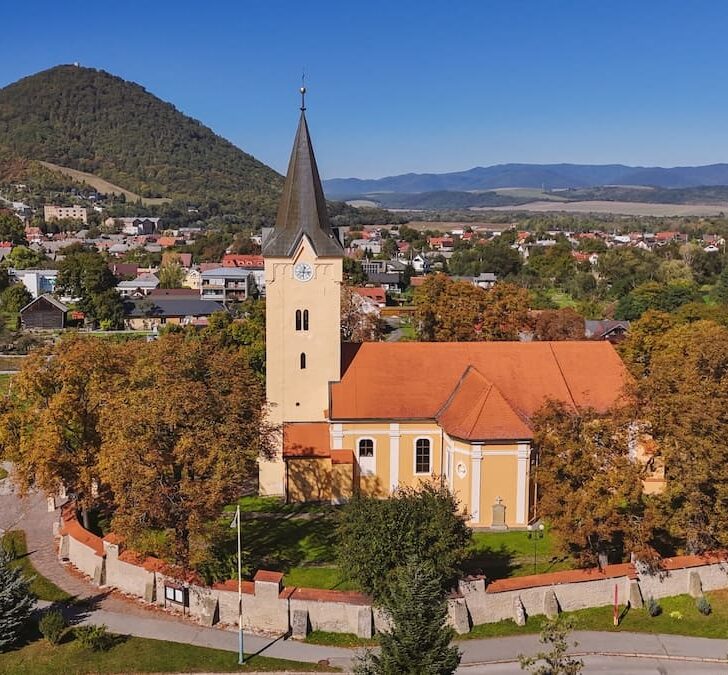


The Roman Catholic Church of the Assumption of the Virgin Mary was built in the middle of the 13th century and is attributed to the crusading order of the Johannites, as evidenced by their order's emblem - a double cross on a small boat - on both sides of the triumphal arch. In addition, the building style of the church and the rich stonework also point to this. In the church there are retarded Romanesque elements - the cantilevers of the stone ribs of the vaults of the sanctuary, two pastophoria on the eastern wall of the presbytery - and in the exterior a stone cornice with zoomorphic motifs under the combined window of the tower. The stone pastophorium on the north wall of the sanctuary and the stone baptismal font with a tessellated shaft are manifestations of Late Gothic art. The church already had a brick tower before 1438. The church was supposedly built by the Knights of St. John, an order which is also mentioned in the former castle above the nearby Medzianky. The Crusaders performed a military-guard function here. In Hanušovce they had their own monastery, where they allegedly also ran a "hospital". In the Holy Land they came into contact with healing during the Crusades and were therefore considered very good healers.
During the restoration of the church in 1997, during the replacement of the modern pavement in the presbytery, a stone epitaph with the family coat of arms of the Sóos family was uncovered. After the restoration, it is installed on the wall of the south vestibule of the church, which is called the „Count's hut“ by the local parishioners. According to written records, Ján Sóos was buried here as the last male descendant of this branch of the family (ultimus Sóos).