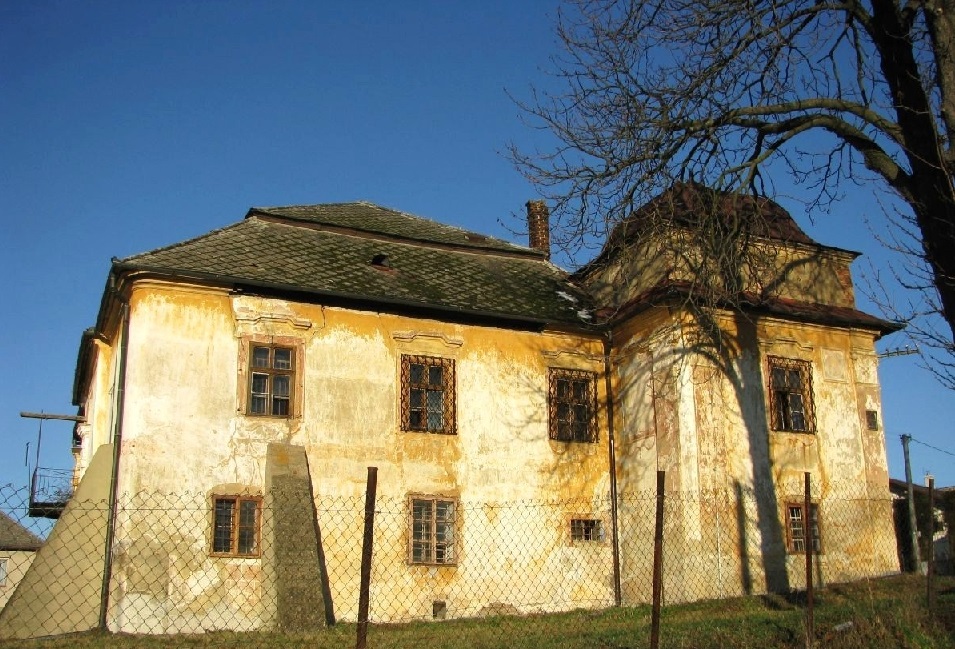
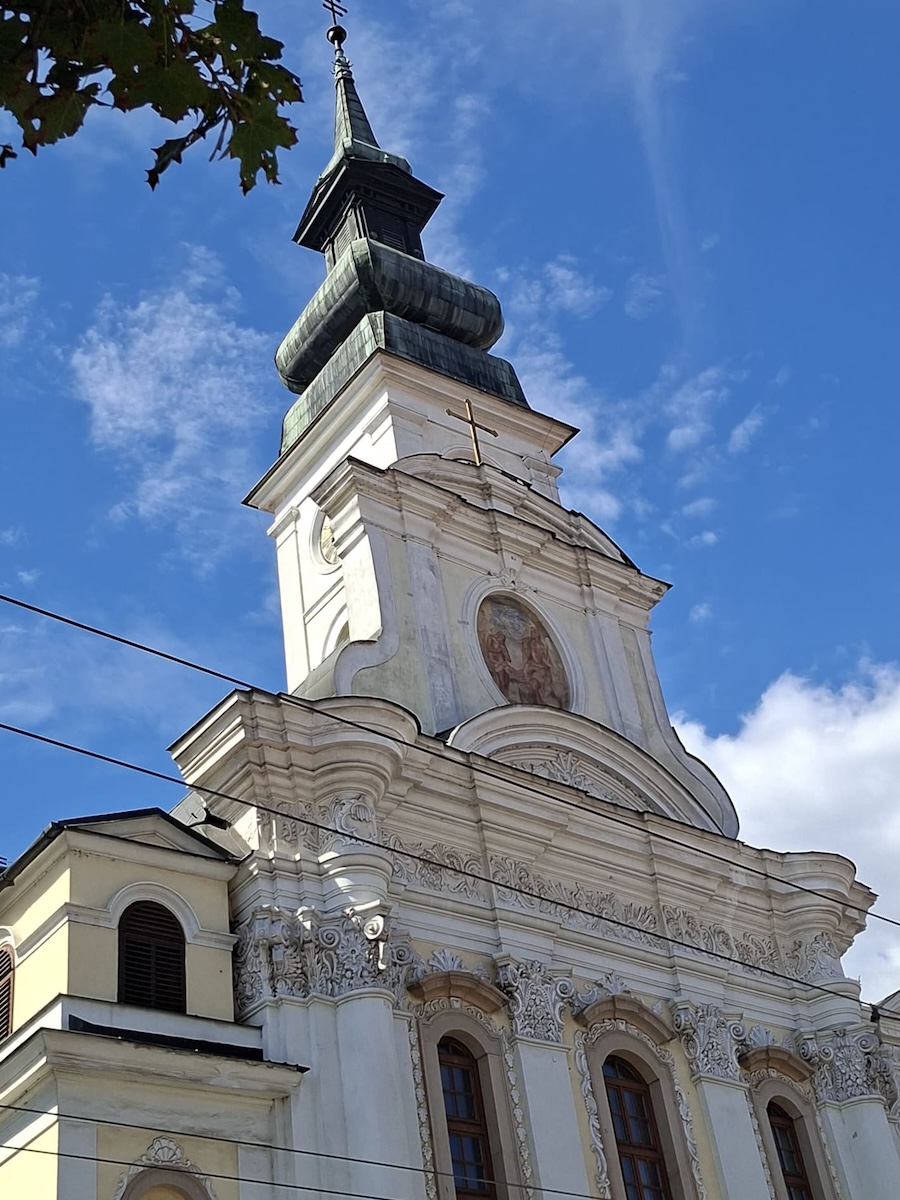
Cathedral Church of St. John the Baptist it is one of the most important religious monuments Prešov and is also the seat of the Greek Catholic Archdiocese. The cathedral is situated in the historic centre of the city, and its present appearance is the result of a number of structural alterations carried out over several centuries.
The history of the site dates back to the 14th century, when a town hospital was built on the southern outskirts of what was then Prešov. A small chapel was added to it later in the same century. It was on this very spot that work began in 1429 on a new hospital church dedicated to the Virgin Mary.
From the hospital church to the cathedral
From the very beginning, the church was linked to the almshouse, hospital and poorhouse located in its immediate vicinity. During the Reformation, it became the Protestant church for the Slovak population of Prešov.
A significant change took place in 1673, when, by decree of Emperor Leopold I, the church was handed over to the Order of Friars Minor. The Friars Minor arrived in Prešov that same year and, along with the church, also acquired the local hospital.
In the 17th century, the church was connected to the Minorite monastery. In the following century, it underwent extensive Baroque alterations, which significantly shaped its present appearance.
Baroque decoration
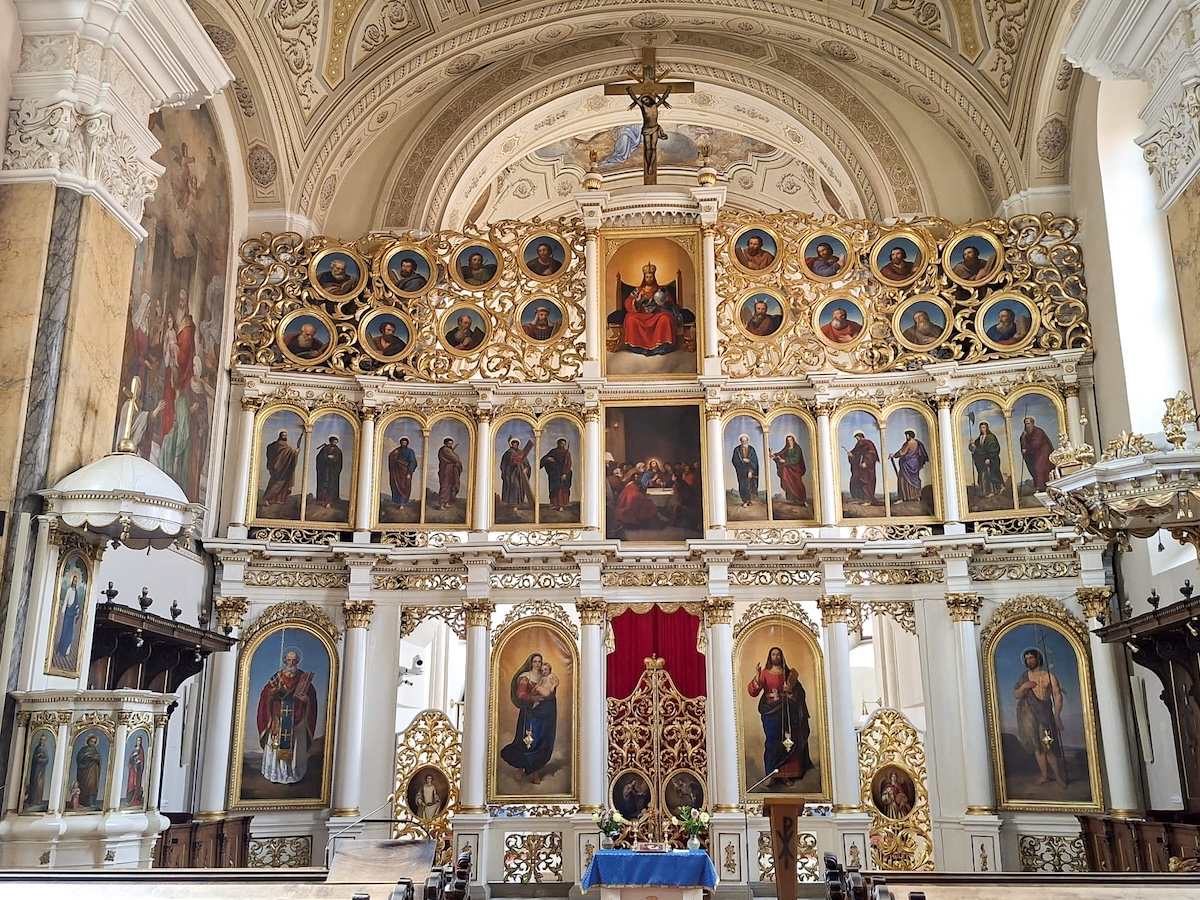
The church’s current appearance is primarily the result of its Baroque reconstruction in the 18th century. Among the most striking features of the interior are the frescoes, which were painted in 1757.
Four large frescoes depicting scenes from the life of … have survived to this day on the ceiling of the nave St John the Baptist, to whom the church is now dedicated. The interior decoration thus reflects not only the building’s historical development, but also its spiritual purpose.
A church of the Greek Catholic Church
Since 1818, the church has belonged to the Greek Catholic diocese. However, its history was significantly influenced by political and religious events in the 20th century.
In the 1950s, following the dissolution of the Greek Catholic Church in Czechoslovakia, the church was handed over to the Orthodox Church. It was returned to the Greek Catholic Church in 1968, when its activities in Czechoslovakia were resumed.
Today, the church is a major spiritual centre for Greek Catholics and, at the same time, one of Prešov’s most important historical and cultural landmarks.
The sarcophagus of Blessed Peter Paul Gojdič
One of the most significant features of the church’s interior is the north chapel, where, in front of the altar, stands a sarcophagus containing the remains of Blathe venerable Bishop Peter Paul Gojdič.
His remains were laid to rest in the sarcophagus following his beatification in 2001. Bishop Gojdič is one of the most prominent figures of the Greek Catholic Church in Slovakia, and his tomb in the cathedral is a place of prayer and veneration for the faithful.
A replica of the Shroud of Turin
Another notable feature of the cathedral is a replica of the Shroud of Turin, which is displayed behind glass on the north wall of the cathedral. Prešov Cathedral received it in 2003 as a gift from the Archdiocese of Turin.
This is a facsimile, that is to say, an exceptionally accurate copy of the original Shroud of Turin. According to available information, only four copies of this version were produced, making it an exceptionally interesting artefact not only from a religious but also from a historical perspective.
A place of history and spiritual life
The Cathedral of St John the Baptist is today a place that embodies more than six centuries of Prešov’s history. Its history spans the era of the medieval hospital, the Reformation, the presence of the Friars Minor, the Baroque reconstruction, the establishment of the Greek Catholic diocese and the turbulent period of the 20th century.
For visitors to Prešov, it is an interesting place to visit, not only because of its architecture and décor, but also because of the notable figures and artefacts associated with the cathedral. The sarcophagus of Blessed Peter Paul Gojdič and a rare replica of the Shroud of Turin are among its most significant attractions.
The cathedral also contributes to the historic character of Prešov’s city centre and, whilst strolling through the town, offers a glimpse into the region’s spiritual and historical heritage.
Source: OOCR RŠ
Source of photographs: OOCR RŠ
Map
Gallery

Information
The Cathedral of St John the Baptist is situated in the historic centre of Prešov and is one of the city’s most significant religious monuments. Its history dates back to the 14th century, whilst its present appearance is largely the result of a Baroque reconstruction in the 18th century.
Four frescoes depicting scenes from the life of St John the Baptist, dating from 1757, have been preserved inside the church. The northern chapel houses a sarcophagus containing the remains of Blessed Bishop Peter Paul Gojdič.
Another interesting fact is that a facsimile of the Shroud of Turin, which the cathedral acquired in 2003 from the Archdiocese of Turin. It is one of four copies made.
The church is associated with the Greek Catholic Church. Following its dissolution in the 1950s, it was used by the Orthodox Church, before being returned to the Greek Catholics in 1968 following the re-establishment of their church.