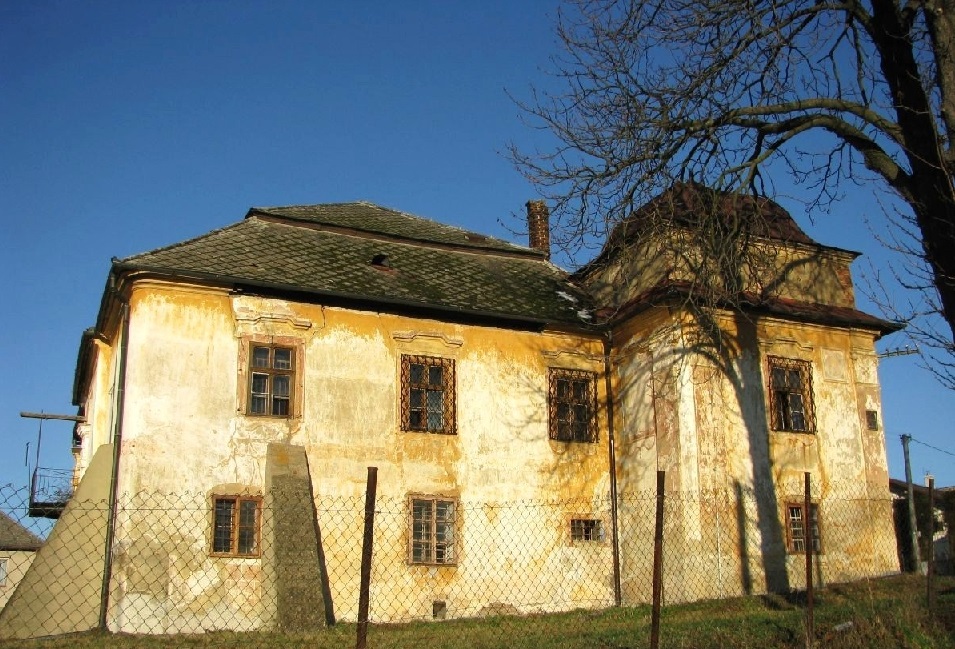

Szirmayovský manor house - palace Prešov
The palace was built by Tomáš Szirmay and changed its appearance and owners, so its original name gradually fell into oblivion and today's generations know it either as the Orthodox Divinity Faculty or as the House of Pioneers and Youth, also popularly called „piňďak“.
The manor house or palace was built in the first half of the 18th century on the outskirts of the town of Prešov as a lord's residence with a lighthouse. The plan was L-shaped, a single-storey stone building with seven chambers, two rooms and a chamber. The mansion was furnished with artistic furniture and valuable paintings by Italian masters. There was a lively musical life in the mansion. It is said that there was a 38-member choir. Later, the building was adapted to its present form and when it became the property of Baron Jan Splényi, it was adapted to a more representative appearance. The terrain of the surroundings was modified into a valuable park and fruit garden, extending as far south as the railway line and west to the present-day Black Bridge. Today this slingshot is divided, but you can still admire a remarkable, nearly two-hundred-year-old specimen of horse chestnut in the north courtyard. The park landscaping, as has been customary since the Baroque, included a parterre, or regular ornamental area in front of the courtyard facade with a buttress once adorned with a fountain.
During the last mentioned modification, rich late baroque elements and stucco decoration appeared on the facades. On the south side there was a magnificent bay with a triangular gable, and the whole curio house was given a mansard roof. The risalit is divided by a quartet of pilasters, with an entrance in the middle. The windows of the whole building are decorated with wrought-iron bars with a motif of circles, aces, flowers and floral sprays. The living areas have Prussian vaults, one of which has semicircular niches where the stove was placed. Two doors from the original interior have been preserved. There is a subterranean space under the curio, accessible from the exterior, with a vaulted ceiling. There is also supposedly another cellar, which was entered from the corridor, at the point where the wings cross. The Curia, or Szirama Palace, was used for several purposes. Many of these are obscured by obscurity. Allegedly during WW1 there were so-called Typhoid Barracks where typhoid was treated, in WW2 the building was occupied by the Germans and after the war it was a military barracks. Later, pioneers settled here and it is worth mentioning the pioneer brass band led by Viliam Tarjanyi, to whom a commemorative plaque on the facade is also dedicated.
Szirmay Palace is part of the Šariš castle roads.
Source:Discovering Prešov
Photo: Jozef Koulič, Ing, pamiatkynaslovensku.sk
Map
Gallery