
Prešov It is one of the oldest free royal towns in Slovakia. It is an important meeting place Western and Eastern cultures, historical the city of salt and the natural centre of the region Saris. In the past, it was known by the names Eperjes, Eperies, Preszow, Prjašiv, Fragopolis or Eperiessinum.
The town lies at the confluence of the rivers Torysa and Sekčov, in the northern part the Košice Basin. From the west, it extends into its territory The Šariš Highlands and it is bordered to the south-east by Slanské vrchy. Prešov is also crossed by the 49th parallel, which symbolically links him to cities such as České Budějovice, Regensburg and Paris.
History of the town
The first written reference to Prešov dates from the year 1247, when it is stated in the King’s charter Bela IV. Its favourable location at the crossroads of trade routes and the arrival of German settlers contributed to its rapid economic and urban development. In 1374 Prešov was granted the status of free royal town.
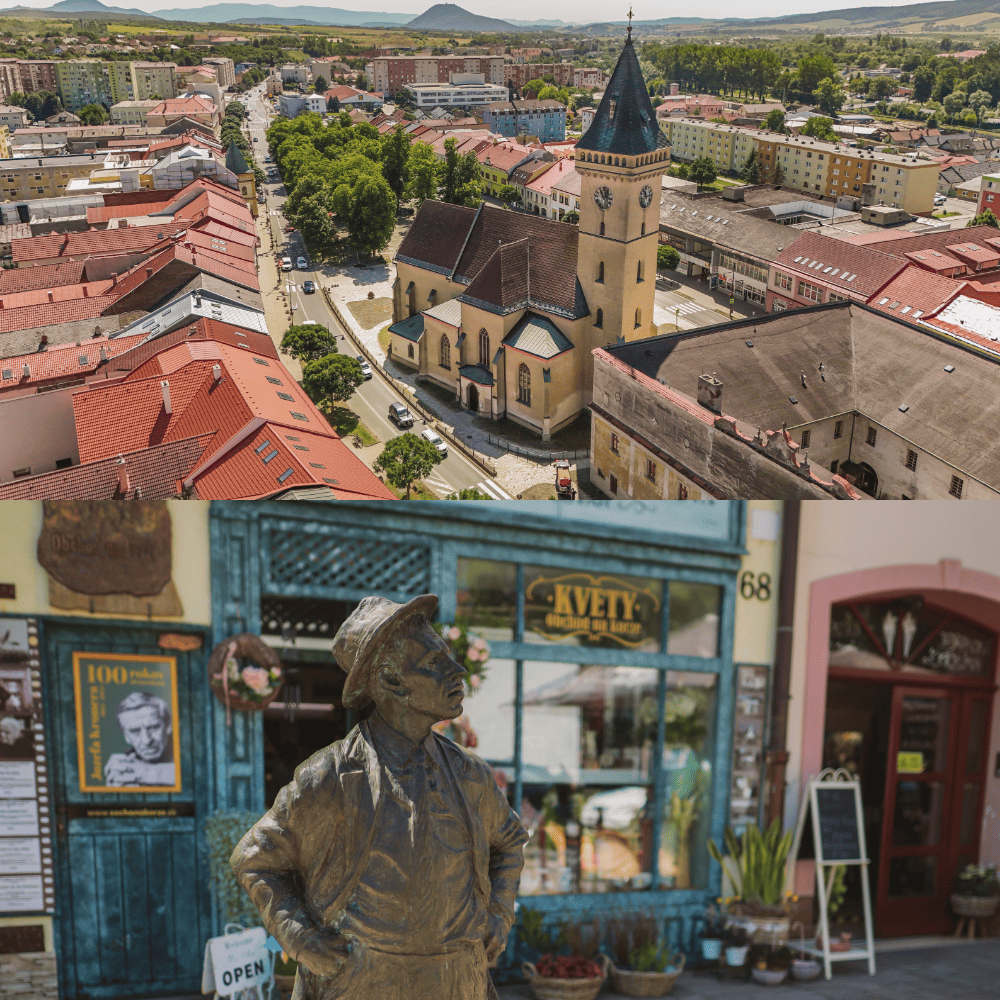
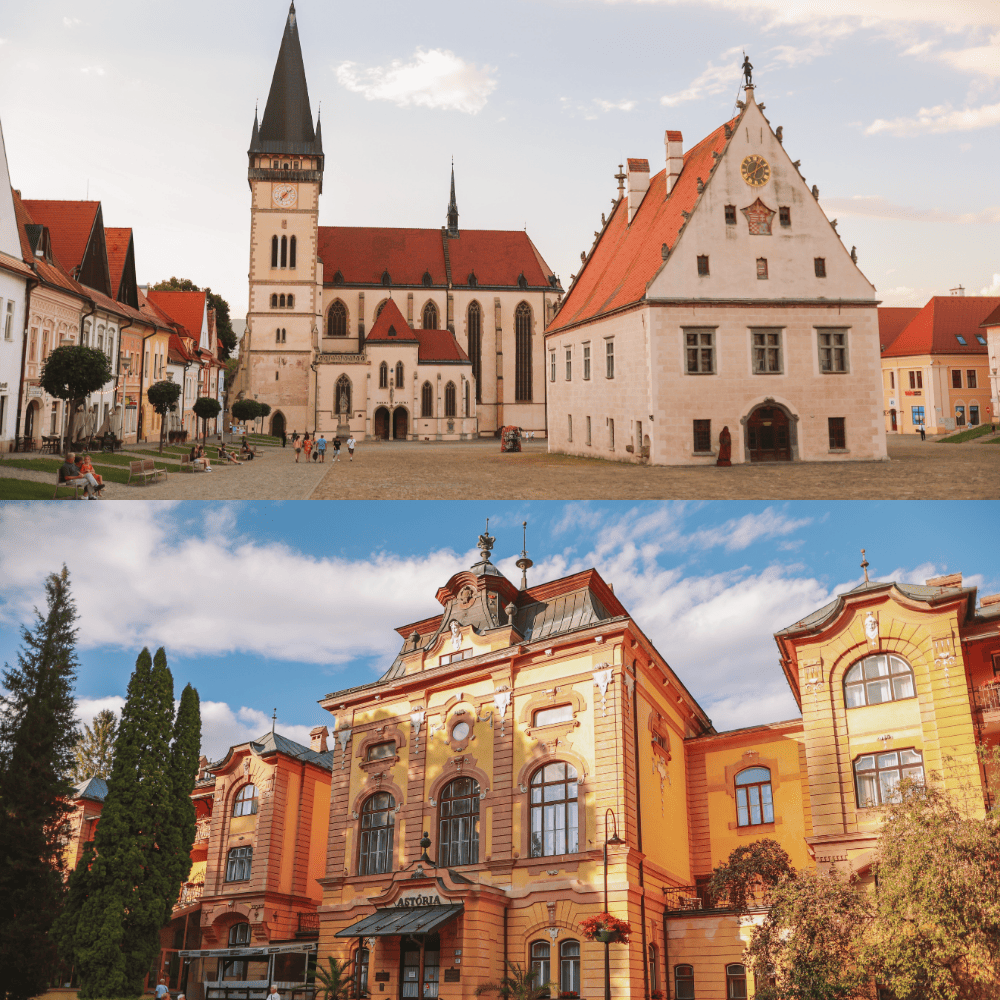
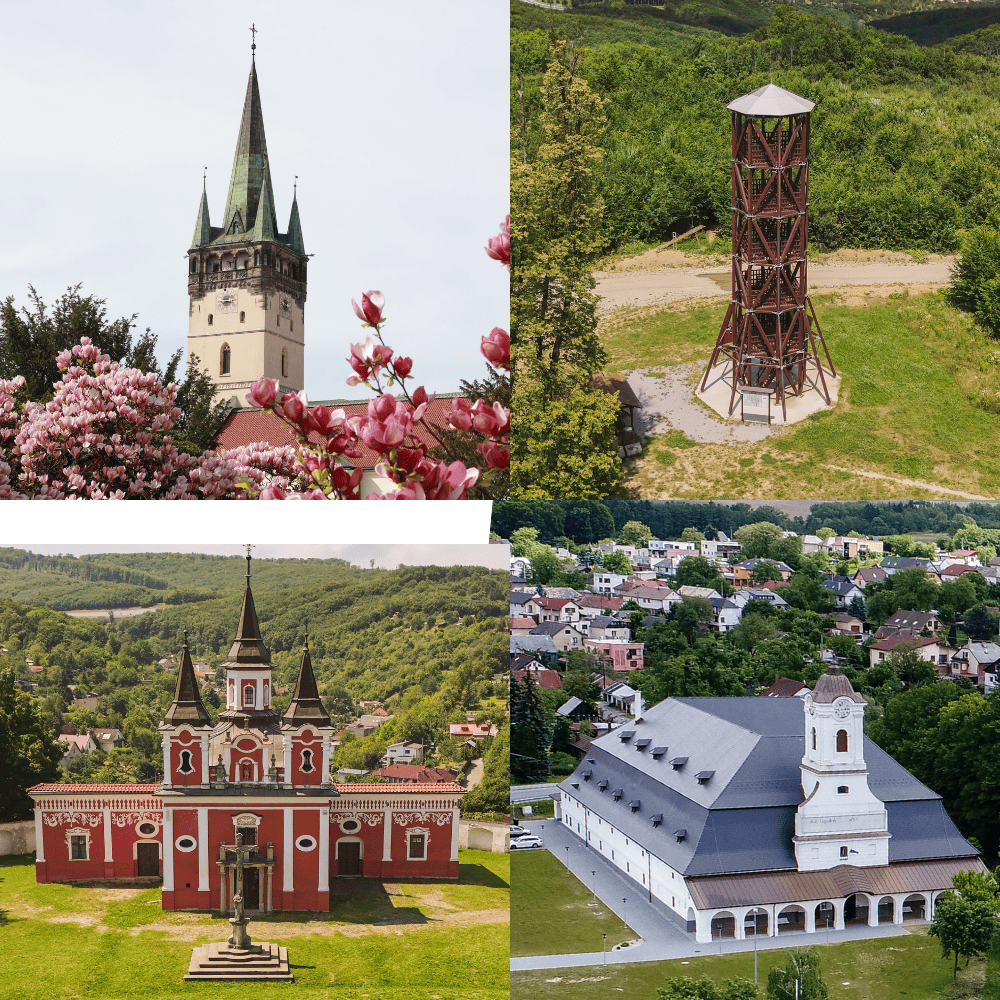
The economic boom of the 14th and 15th centuries was reflected in the construction of magnificent town houses, which still line the historic centre today. Its most prominent feature is Co-Cathedral of St Nicholas, the origins of which date back to the time of the original German settlement. Other notable monuments include town hall, Caraffa Prison, which now serves as a gallery, and the historic town school.
In the Middle Ages, Prešov was protected by a system city walls and fortifications. It also included a technical building Kumšt, later converted into a water tower. Until the early 20th century, it supplied water to the reservoirs on Hlavná Street, and today it is one of Central Europe’s rare engineering monuments.
Education and religious diversity
The following had a significant influence on the town’s development: the Reformation. Its most notable landmark is Evangelical College, which was one of the most important educational institutions in Hungary. Part of its legacy is the collegiate library with its extensive historical collection. The Renaissance building also dates from the Reformation period Church of the Holy Trinity.
Over the centuries, Prešov has been home to people of various nationalities and faiths. This cultural diversity is documented by The Church of St Joseph and the Franciscan Monastery, Greek Catholic Cathedral of St John the Baptist, The Orthodox Church of St Alexander Nevsky a an Orthodox synagogue in the Moorish style.
Historical events and architecture
The town’s history in the 17th and 18th centuries was marked by uprisings by the estates, plague epidemics and tragic The Prešov slaughterhouse, dating from 1687, during which 24 townspeople and nobles were executed. A memorial near the Evangelical College commemorates the victims. The plague epidemics are symbolised by a Baroque sculpture group Immaculata on Hlavná Street.
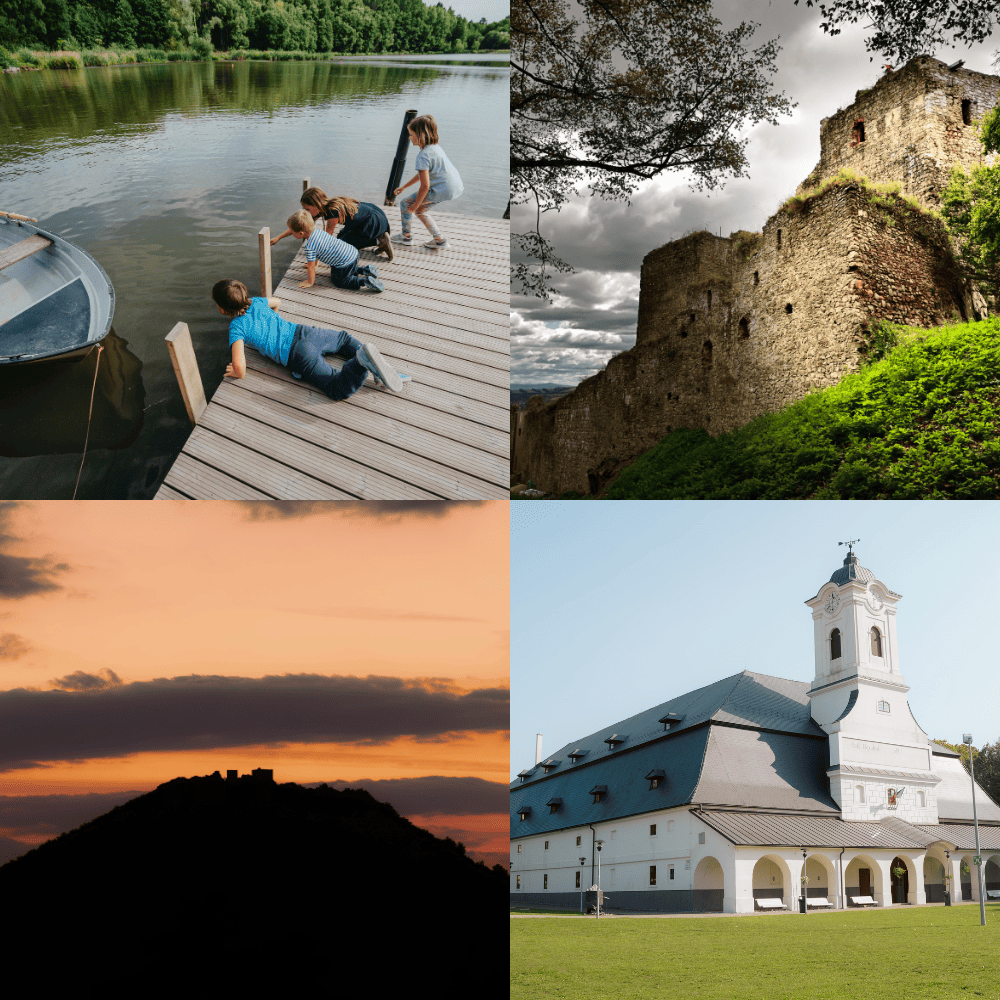
The extraction and processing of salt in what is now a district of the city made a significant contribution to the city’s economic prosperity Solivar. This well-preserved complex of 17th-century buildings was used for extracting brine and producing salt, and is one of the most significant technical heritage sites in Slovakia.
Prešov’s architectural diversity is complemented by Renaissance Rakoci Palace, Rococo-Classical County House and the Art Nouveau building Bosákov's bank.
Prešov is a city rich in history, learning, cultural diversity and significant religious and architectural monuments. As the capital of Šariš It is the natural centre of social, cultural and economic life in north-eastern Slovakia.