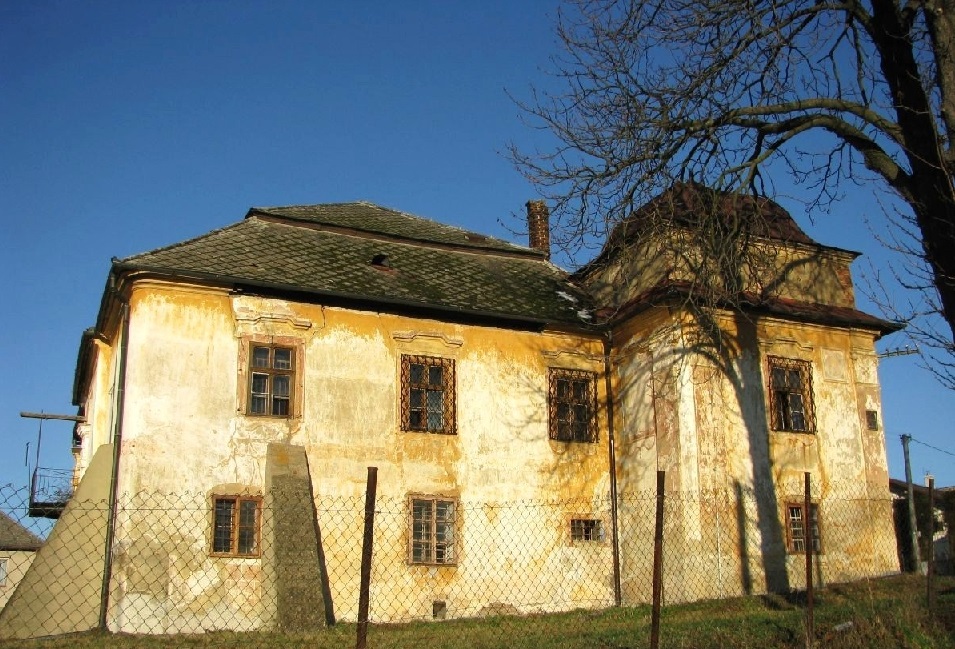

The village of Fintice was a settlement of royal border guards, whose headquarters were located in what is now the manor house. Later, it was probably also the residence of the first owner of Fintice – a nobleman from Slavonia, Comrade Gudu.
The appearance of the manor house
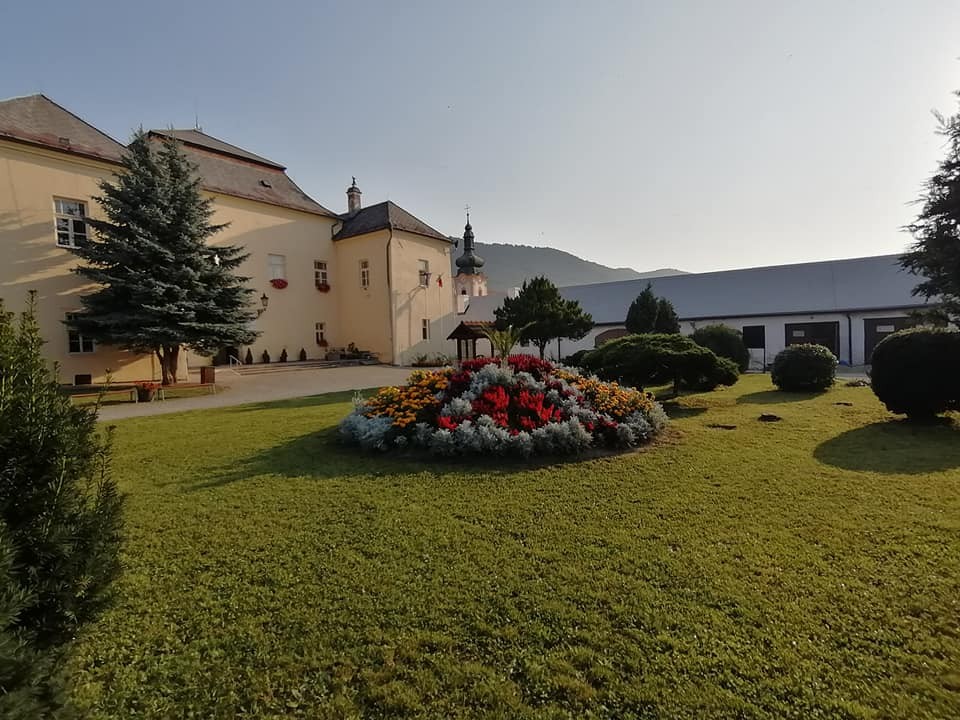
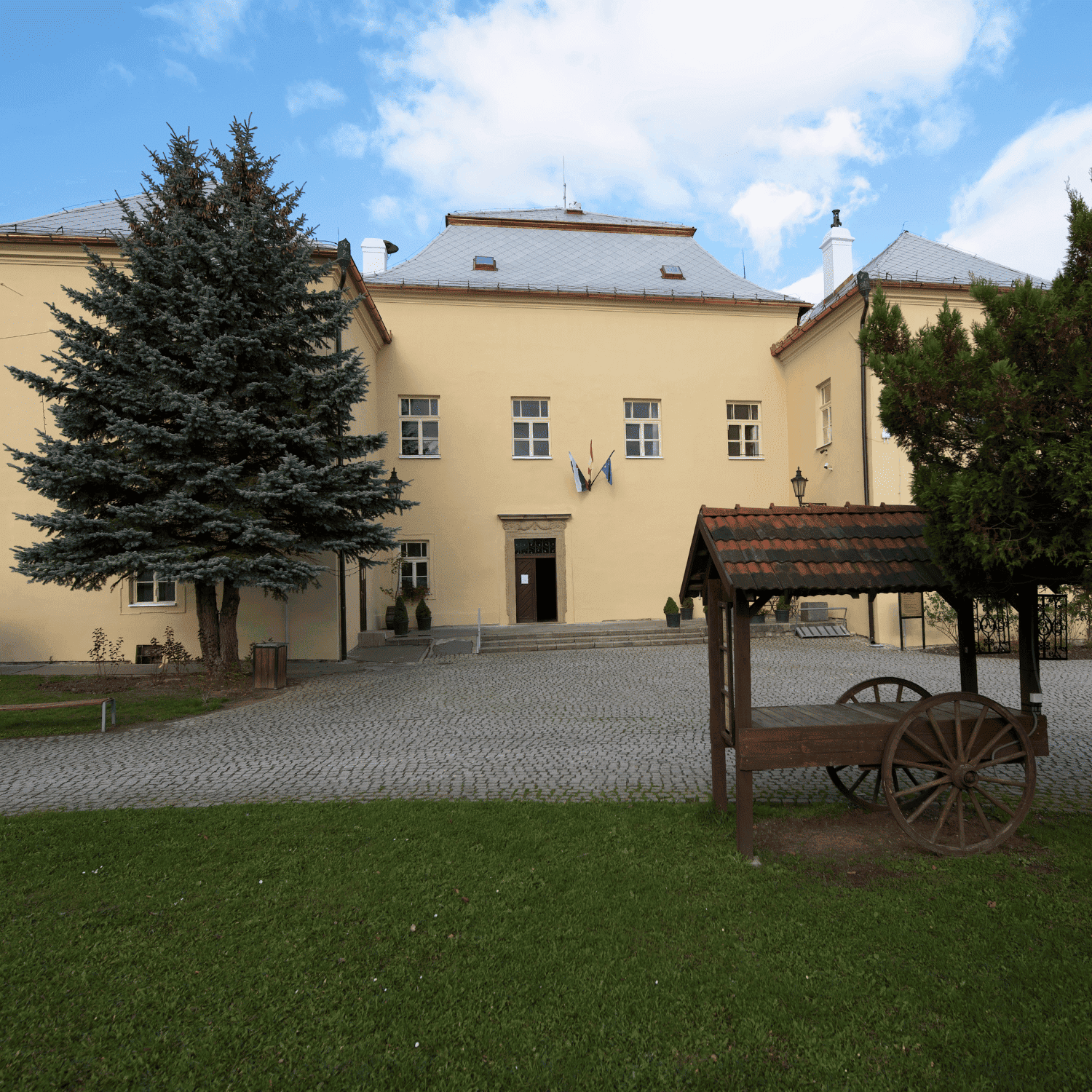
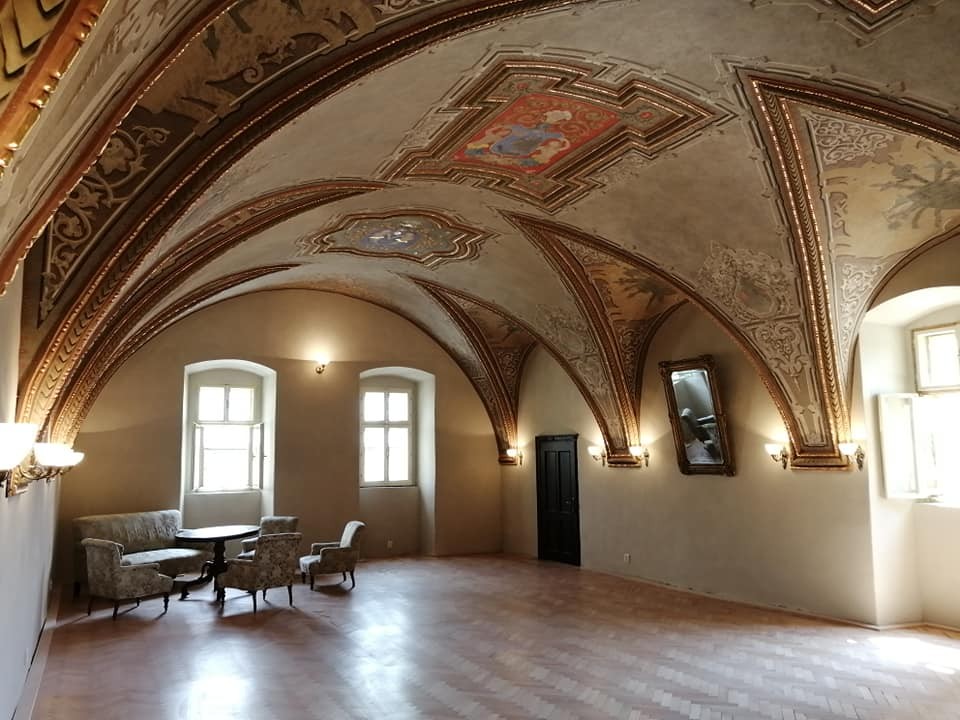
The manor house in Fintice has an irregular floor plan. It is thought to have been built on the site of a manor house commissioned by the estate’s first owners. In the 16th century, they had The Darhols The owners of Fintice had the manor house tower built. A column has been preserved at the entrance; it forms part of the Renaissance staircase inspired by Doric architecture. During the Baroque period, it was rebuilt into its present form. By that time, the building belonged to the Dessewffy family, who refurbished the residence and added a granary with an impressive exterior featuring painted latticework frames and „ox-eye“ windows. The interior of the granary features a barrel vault with lunette segments.
The Dessewffy family placed great emphasis on education, which is why the Fintice manor house contained a large library, state rooms, including the Knights’ Hall, where, in addition to a large collection of musical instruments, they also kept a large number of musical scores, which today form the so-called. Fintica’s collection of musical instruments. It is held in the Literature and Arts Archive of the Slovak National Library.
The manor house had several unique features. In the cellar by the stream there was a natural freezer, consisting of a pile of ice that had been brought in during the winter in several layers. The manor’s courtyard housed both stables and a cattle shed. Another remarkable feature is the connecting structure – a bridge leading into the church.
Fintice Manor is part of Šariš castle roads
Source: OOCR RŠ
Source of photographs: OOCR RŠ, Fintice Manor House
Map
Gallery

Information
The manor house in Fintice is situated right in the centre of the village. It is a 15-minute drive from the city of Prešov, or you can take city bus no. 21; get off at the Námestie J. Kolarčíka stop.
The Gallery and Museum of Folk Art, housed in a former Baroque granary forming part of the manor complex, is open to visitors. By prior arrangement, the tour may also include the church and the Dessewffy family’s noble tomb.