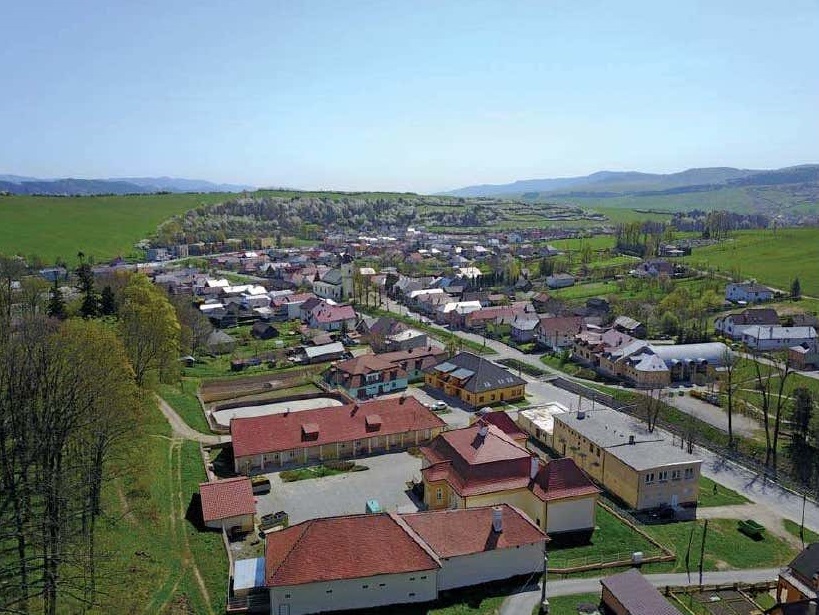


Šarišské Dravce is an ancient Slavic village, one of the oldest in the region of the upper Torysa. The first written mention of the village (Dorauch, Drauch) dates back to 1295 and is related to the installation of a new parish priest in Torys. The inhabitants were mainly engaged in breeding birds of prey for hunting in the nearby noble and royal forest areas. In the 13th century it belonged to the large Tory manor, whose oldest known owner was the Count of the Saxons of Spiš, Detrik of Kércs.
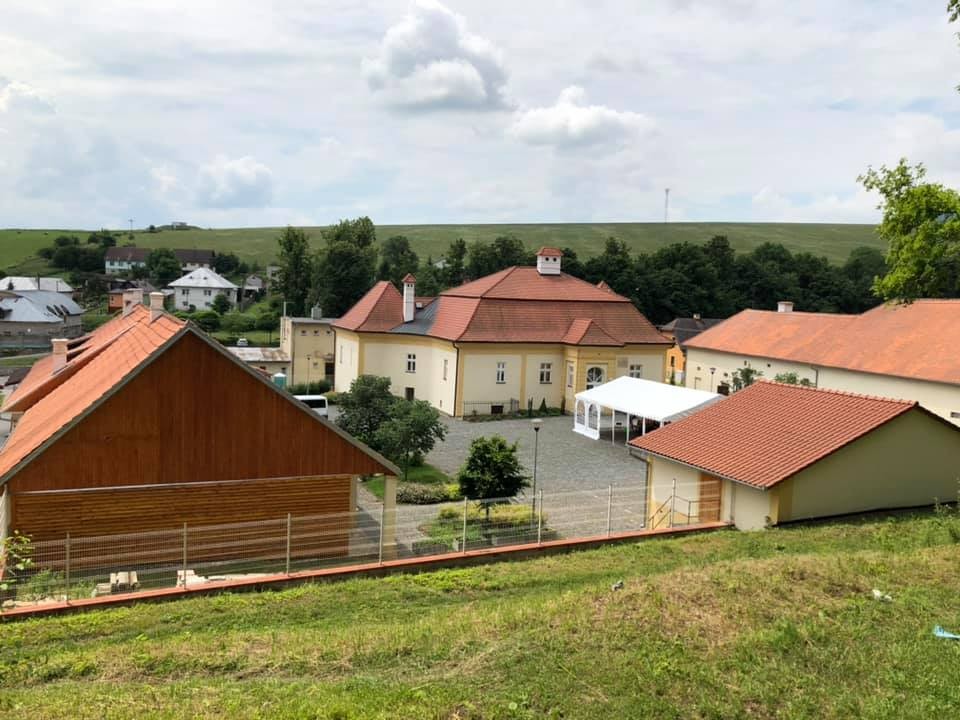
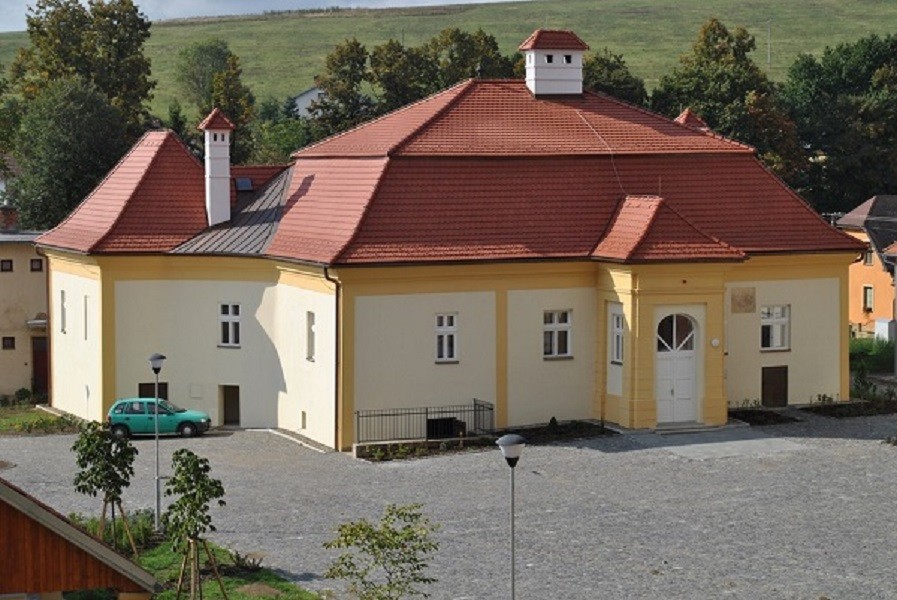
In Šarišské Dravce there were originally two noble residences. The older wooden manor house was built by the representatives of the Stanislav branch of the family, more permanently settled in Brezovica. The manor served first as a kind of economic and administrative centre of the administered estates and only in the later period, in connection with the growth of the family, it became more permanently inhabited by some of its members. The preserved and now restored brick manor house was built later and belonged to the representatives of the Jacob branch of the family. There are no known sources that would allow to identify its builder or to date the exact beginning of its construction, but the results of the research suggest several facts.
The first one is the uncovered (late) Gothic blockwork, revealed by probing research in the northern part of the building. This indicates that the Renaissance building either stands on the foundations of an older building or that the manor house is slightly older than previously thought. The second theory is supported by the discovery of a corner sgrafit in one of the rooms of the north wing, which was probably originally an exterior decoration. The original building was thus built sometime in the second half of the 16th century and is thus one of the oldest surviving Renaissance manor buildings not only in environment of Šariš, but in the whole eastern Slovakia.
Originally it probably served as a temporary dwelling, perhaps a seasonal (e.g. hunting) residence, and only thanks to later reconstruction as a residence. The younger brick manor house could have been built by an important representative of the Jacob branch of the family, Juraj Berzevici, who held a prominent position as the chief captain of the Upper Highlands in 1545-1562, or by his son Jan. Juraj, as a possible builder of the manor, was indeed a wealthy and influential man of his time and the construction of the manor was only a matter of expanding his estate with another mansion, which he could eventually use for the nobility's favourite way of relaxation, hunting.
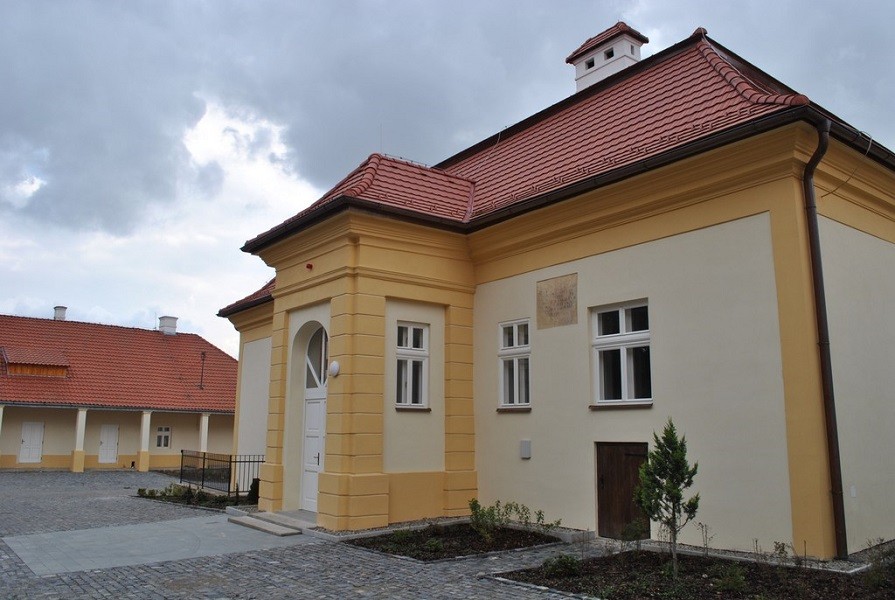
Most probably the manor house was rebuilt by Sigmund Berzeviczi sometime in the first third of the 17th century, by converting an older building into his residence, the appearance of which was already fully subject to the Renaissance architectural concept. Among the decorative elements of the manor house of great artistic value are sgrafit decoration of its facade. On the corners of both towers the right leaf sgrafito of a darker, light ochre-pink-sand colour has been preserved, which thanks to a later addition to one corner has been preserved in good condition. On the northern façade, the historically and artistically very valuable banded sgrafit decoration, which lined the entire perimeter of the manor house, was also uncovered under the plaster. In addition, the Renaissance phase of the construction and reconstruction of the manor is represented in particular by the vaults in the basement of the manor, the strictly rectangular layout of the building and the preserved cross vault in one of the rooms, the stone lining of the entrance to one of the rooms, the fireplace and the original windows on the southern façade. In the basement of the manor there is a stone portal from 1699. It has been preserved to this day the only Renaissance door with an original lock. Interesting and rather unique is the discovery of the technical drainage of the building by a system of channels and collecting stone shafts in the cellar spaces. The inscription in the supraport of the Renaissance portal of the west building JEHOVAH DESIDERIUM MEUM JOAN BERZ(EVICZY) D(OMINI) EAD(EM) HA(E)R(EDITARIUS) DA(RO)C AN(NO) 1700, which means The Lord is my desire.
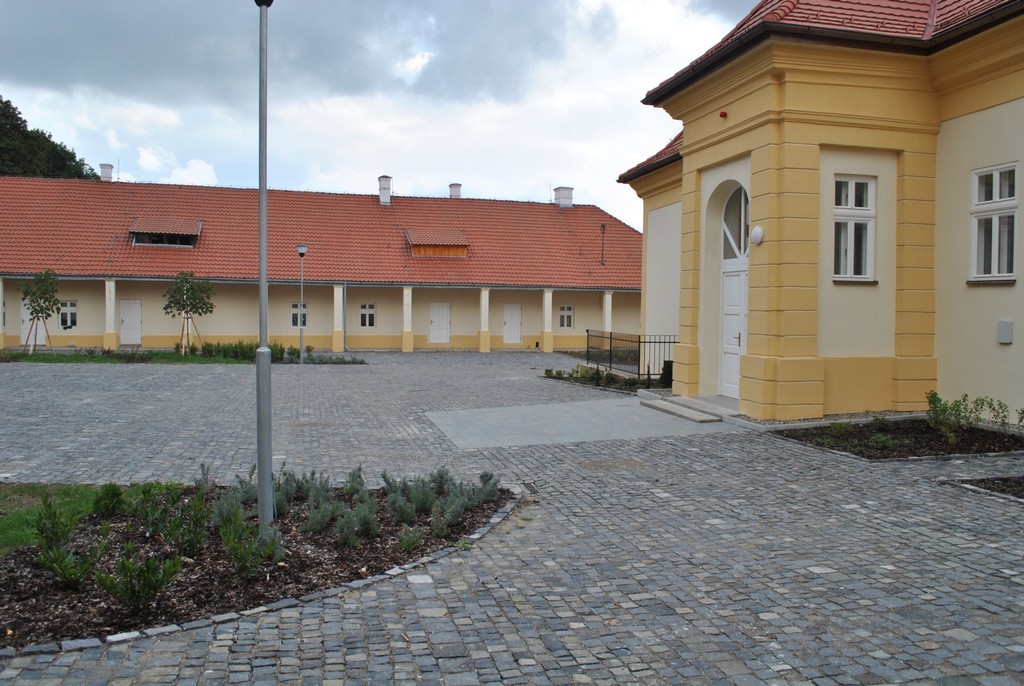
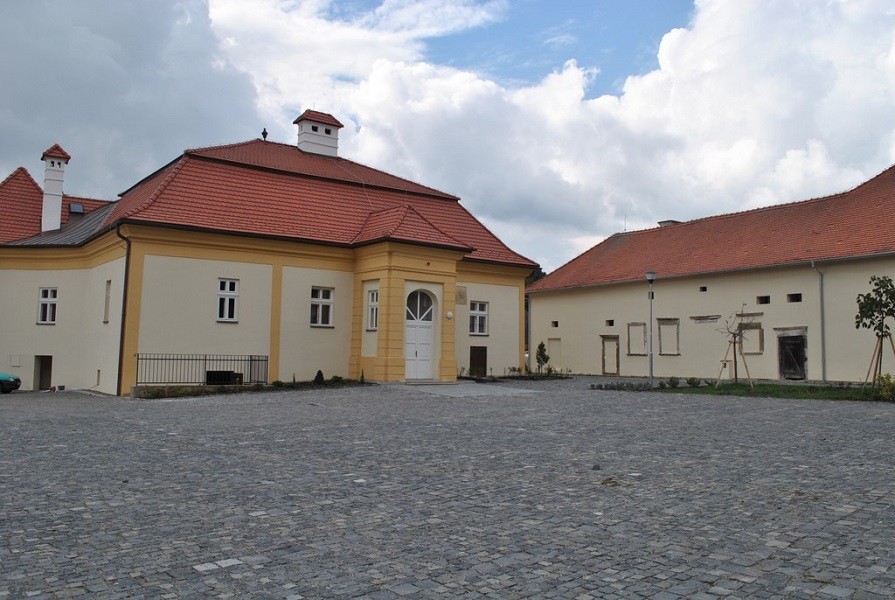
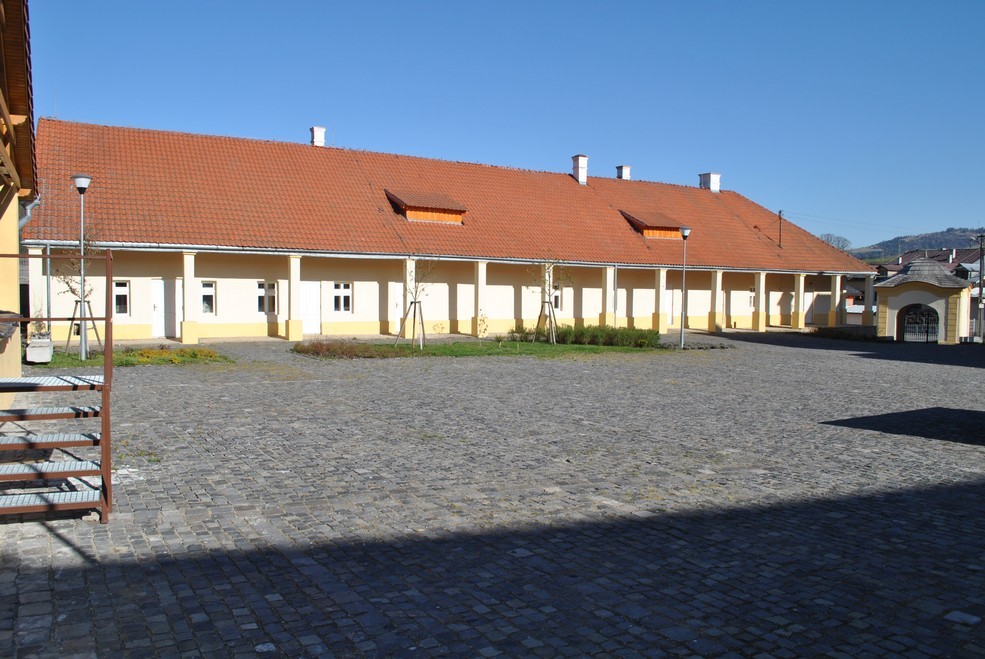
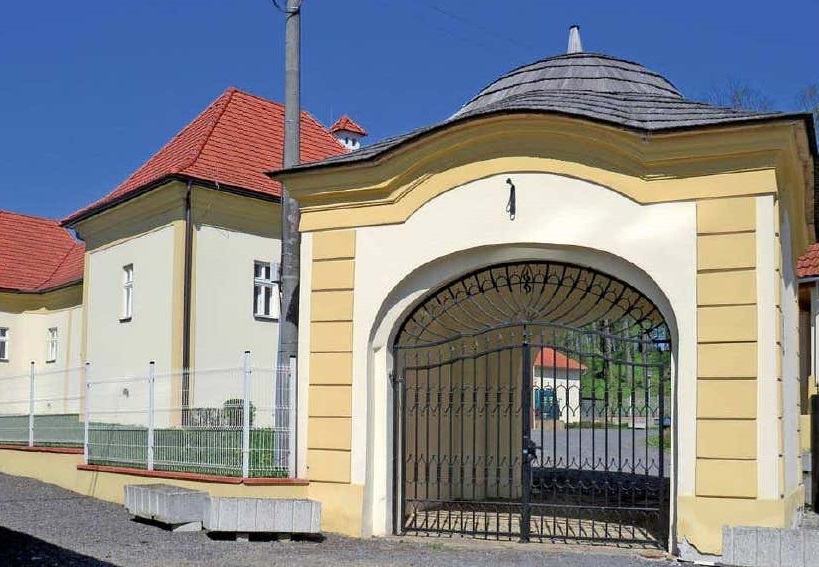
The preserved and currently restored brick manor house with two corner towers belongs to the complex of renaissance noble country residences in the environment of Šariš. The original grounds near the brook consisted, in addition to the main building, of wooden, later brick outbuildings and included a preserved forest park with coniferous and deciduous trees and a garden.
The brick manor house in Šarišské Dravce is marked in documents as a stone house („domus lapidae“) and its owner in 1684 was Ján Berzevici, whose name was part of the manor house for more than three centuries, his son Ján Jr. became its new owner. At a young age he was captured and imprisoned during the last anti-Turkish wars. Later he became a commissioner in Košice and also held the prominent position of royal councillor. It was Ján who in the first half of the 18th century carried out an extensive Baroque reconstruction, which significantly changed the appearance of the Renaissance manor house. The reconstruction covered both the interior and the exterior and included, among other things, the replacement of the original cross vault with a cornice and the installation of a massive mansard roof. John married the French baroness Anne Marie L'Huillier (1706-1776), a relative of King Louis XVI of France. They lived a rich social life, especially in Košice, and together they had four children. The son František, who was a prominent personality of the Dravec branch of the family, took over the family estates in Dravce, because for his considerable merits and loyalty to the crown, in 1775 Queen Maria Theresa of Hungary granted him the noble title of baron for him and his offspring.
Over the years, the manor house has gradually become a splendid residence of several prominent families. In the 19th century also the Smrečáň family. It was here that two extremely important high church dignitaries, brothers Pavol and Ľudovít Smrečáni, were born. Pavol became Bishop of Spiš, later of Velkovaradin, and was buried in his native Šarišské Dravce. His brother Ľudovít even became Archbishop of Jager.
When the nobility left their residence after the change of military-political and social conditions, there was another use for the manor. For several years it served as the seat of the primary school and then for economic and storage purposes for the former JRD.
The Šarišská Dravce cachet is part of the Šariš castle roads.
Source/foto: village Šarišské Dravce
Map
Gallery