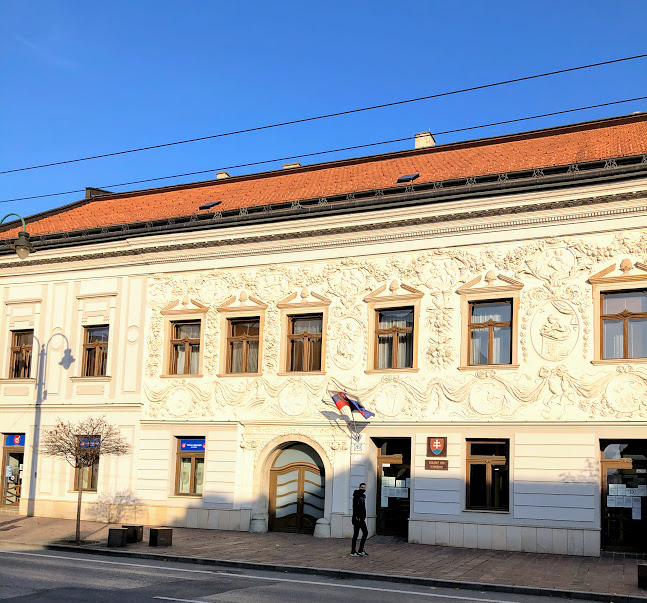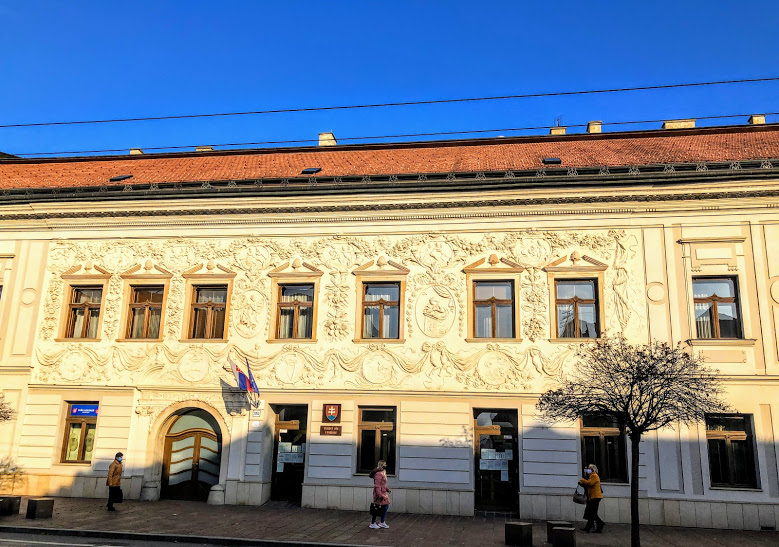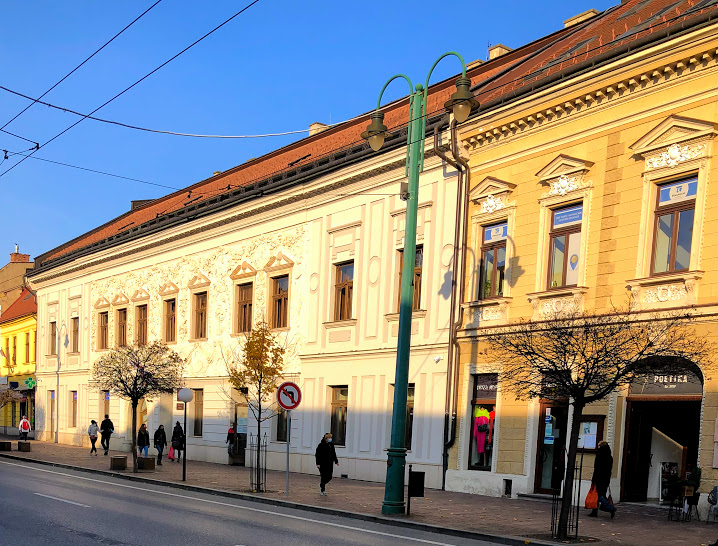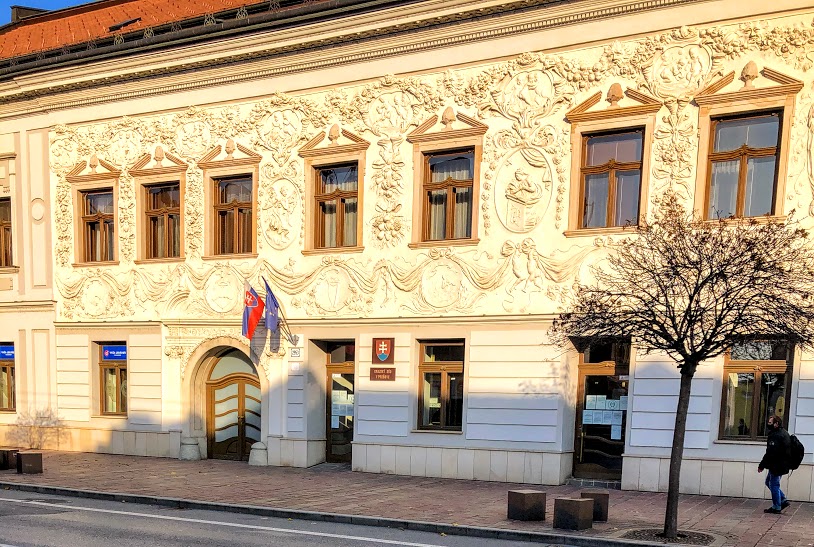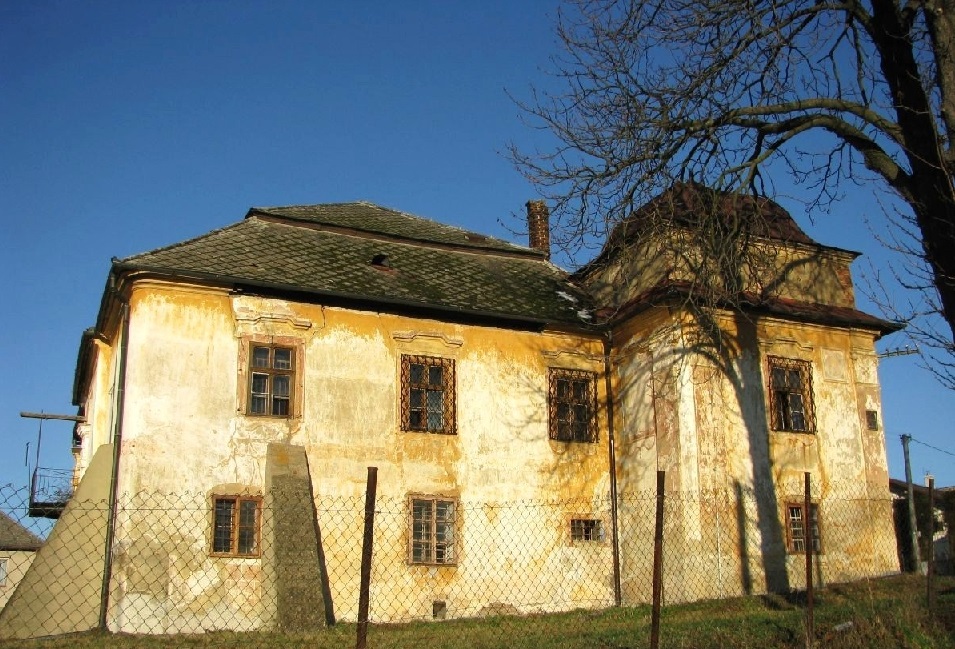

Originally there were two lighthouses and craftsmen's houses on its site. The combination of 5 houses in the middle of the 18th century and extensive reconstruction created a two-storey palace in the late baroque style (the so-called Louis XVI style). The owner of one of the houses was Ondrej Klobušický, the chief administrator of the Upper Rakoczy estates. It was with him that in 1650 he stopped on his way Jan Amos Komenský and spent several days in the house. Another of the houses belonged in the 16th-17th centuries to the Humenne magnates, the Counts Drugeth. Count Ladislav Berčeni, the legendary hussar commander and Marshal of France, was born here at the end of the 17th century. The main initiator of the reconstruction and construction of the palace was František Klobušický, a former royal tabular councillor. The magnificent reconstruction, begun under Count František Klobušický, was continued by his son Štefan and finally completed by his widow Klára Kapyová. The result of the reconstruction was a representative two-storey palace in the late baroque style (the so-called Louis XVI style) with a four-winged layout and a rectangular courtyard in the centre. The palace has an enclosed courtyard and an interesting front 11-axis facade. From the art-historical point of view, the rich stucco decoration of the street facade with figural motifs from Italian masters. It was already highly appreciated in the early days of professional interest in art monuments in the Austro-Hungarian period. On the world exhibition in Paris in 1900 its copy was part of the Hungarian pavilion, where the most beautiful parts of Baroque buildings were presented on the western facade.
The relief decoration is dominated by the scene Annunciation to the Virgin Mary, which is divided into two medallions. Between the third and fourth window is a figure Archangel Gabriel and between the fifth and sixth windows a figure Our Lady. Under the crown cornice are seven cartouches depicting groups of putti dancing, playing musical instruments and having fun blowing bubbles. The five medallions, which are located below the window sills in the lower horizontal band of decoration, have not yet been iconographically identified. One is to the left of the Klobušický coat of arms, which is above the portal; the remaining four are to the right of it. The medallions are connected to each other at the top by a drapery held by putti. A heavy flowing cloth curtain is tied to the top of each medallion with distinctive bows. The lower parts of the medallions are surrounded by floral decoration - blooming sunflowers alternating with reed (?) leaves. Medallion to the left of the coat of arms (from the viewer's point of view) depicts in relief a pair of hands, that gesticulate towards each other from the clouds at its edges. Second medallion, following the coat of arms, represents harp with the crown on. In the third medallion is mermaid in the waves, playing the violin. The subject of the fourth medallion is a sleeping lion. The fifth medallion shows muscular forearm with rolled-up sleeve, which holds the downward pointing club and the lion's skin. Each medallion includes a blank inscription ribbon. The harp with the crown is assumed to be King David but with a question mark. For the hand with the club and lion skin, a similar note about Hercules. The eccentrically placed main portal on the ground floor is emphasized by a forked supraport with the coat of arms of the Klobušický family. On the eastern side of the palace adjoined a large park, extending up to the walls. The garden was built in the manner of a French park.
Undoubtedly one of the most significant events in the history of this noble residence was the visit of the heir to the throne, Joseph II. in the summer of 1770, during which he received in audience the chief commanders of the Polish confederates - opponents of the pro-Russian ruler Stanislaus Augustus - settled in Prešov. At the beginning of the 19th century, the building of the Klobušický Palace housed the first Prešov (German) theatre, founded by Samuel Krieger, a pharmacist from Prešov.
During the 19th - 20th centuries it served several purposes, currently it is the seat of the Regional Court in Prešov.
The Klobušický Palace is part of the Šariš castle roads..
Source:GoPrešov and Peter Megyesi
Map
Gallery