A man from Bratislava arrives in Šariš, sits down in a local pub and suddenly realises that his Slovak might not be up to scratch. And when Rusyn is added to the Šariš dialect, you start to wonder whether you might have accidentally crossed the national border on the way. But you certainly haven’t! He’s still in Slovakia; he’s just arrived in Šariš – a region where, within a relatively small area, languages, nationalities, dialects and religions have been intermingling for centuries. And that is precisely what makes it so fascinating. Whilst in one village you’ll hear the Šariš dialect, a few kilometres further on you’ll hear Rusyn. A Roman Catholic church gives way to a Greek Catholic church, and round the next bend you might come across an Orthodox church.
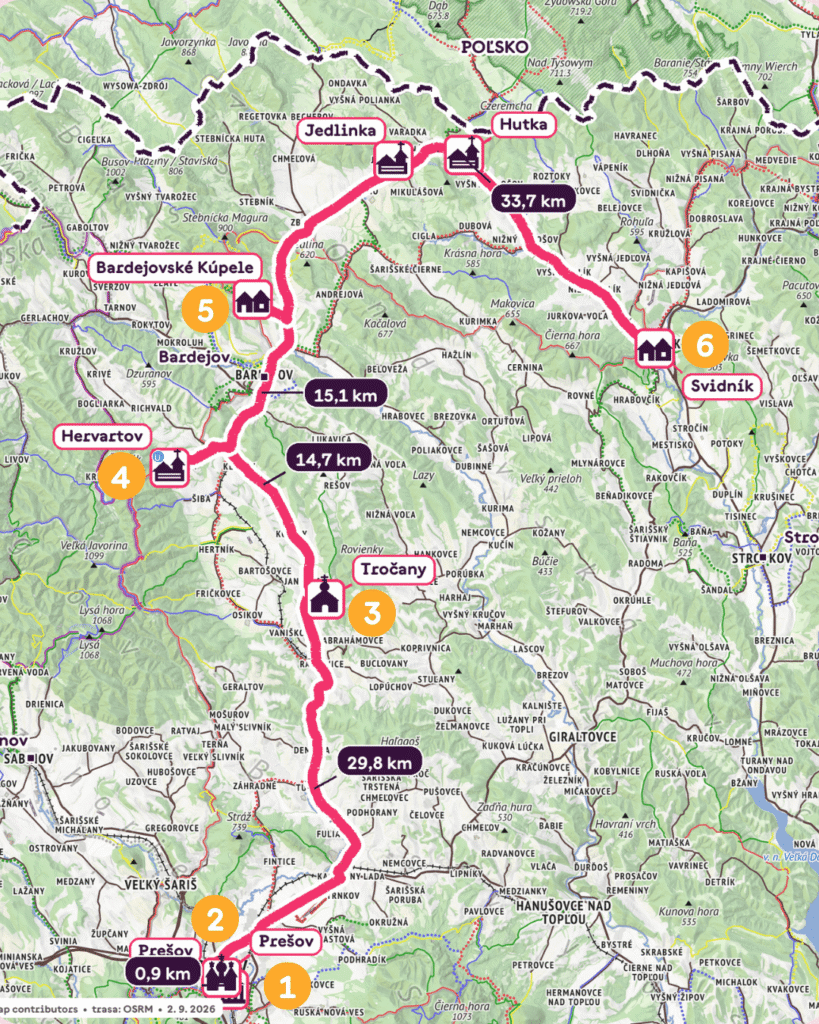
So this time, we’re going to drag our Bratislava local out of the pub and send him on a little cultural and linguistic expedition. Leave your passport at home and come along with him. Take inspiration from the Rusyns’ route and follow in the footsteps of the filming of our new videos, which are part of rebranding to mark the 10th anniversary of the OOCR Šariš Region. The route brings together the languages, dialects, religions and cultures of the Šariš region.
Rusyn culture at the museum
The first place we’ll visit will be an introduction to Rusyn culture. We’ll start in Prešov, in SNM Museum of Rusyn Culture.
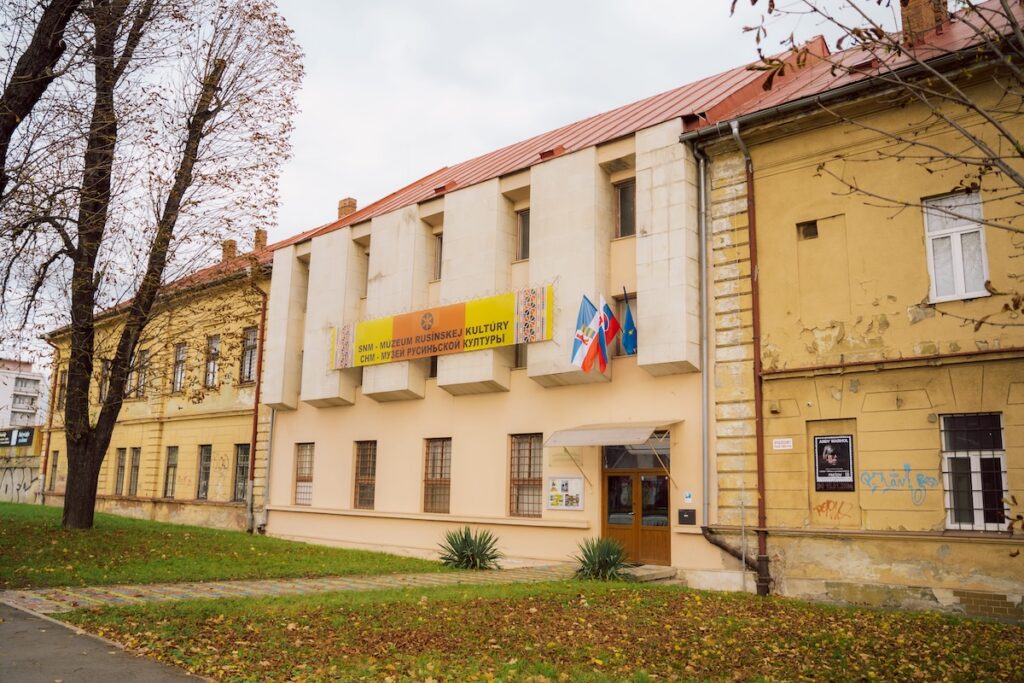
The Šariš region and the entire Prešov Region are closely linked to the Rusyns. On 27 January 1995, the standard Rusyn language was codified in Slovakia, and in 2011, the Rusyns became the third-largest ethnic minority in Slovakia. As a sign of acceptance of the will of the Rusyn population, the following was established in 2007: Museums of Rusyn Culture in Prešov, which was opened to the public in 2008. The museum focuses on documenting the development of science, culture, art and technology within Slovakia, as well as on facts concerning the Rusyn population living abroad (emigration in the past and present). The museum has developed a publishing programme aimed at documenting the testimonies and memories of surviving witnesses from various areas of life within the Rusyn minority in Slovakia.
The Sacredness of the Rusyns
The Greek Catholic faith is also closely linked to Rusyn culture, so we’re staying in Prešov and our second stop is Cathedral of St John the Baptist. Its history dates back to the end of the 14th century, when an Augustinian hospital chapel dedicated to the Blessed Virgin Mary stood on this site; during the Reformation, it served the Evangelicals. By royal decree, the Minorites acquired the chapel and hospital and converted them into the Monastery of St John the Baptist. The layout of the church was adapted from the original Eastern Rite to the Western Rite.

On 22 September 1818, Pope Pius VII, by the papal bull *Relata semper*, canonically established the Eparchy of Prešov, and the Church of St John the Baptist became the cathedral, as a result of which it was once again adapted for the celebration of divine services and rites according to the Eastern Byzantine tradition. Following the forced dissolution of the Greek Catholic Church in 1950, the cathedral came into the ownership of the Orthodox Church and was not formally returned until eighteen years later. Legally, the Orthodox Church remained the owner of the property; however, this situation was definitively resolved in 1999 by a decision of the Ministry of Culture, which transferred the cathedral and other buildings to the Greek Catholic Church.
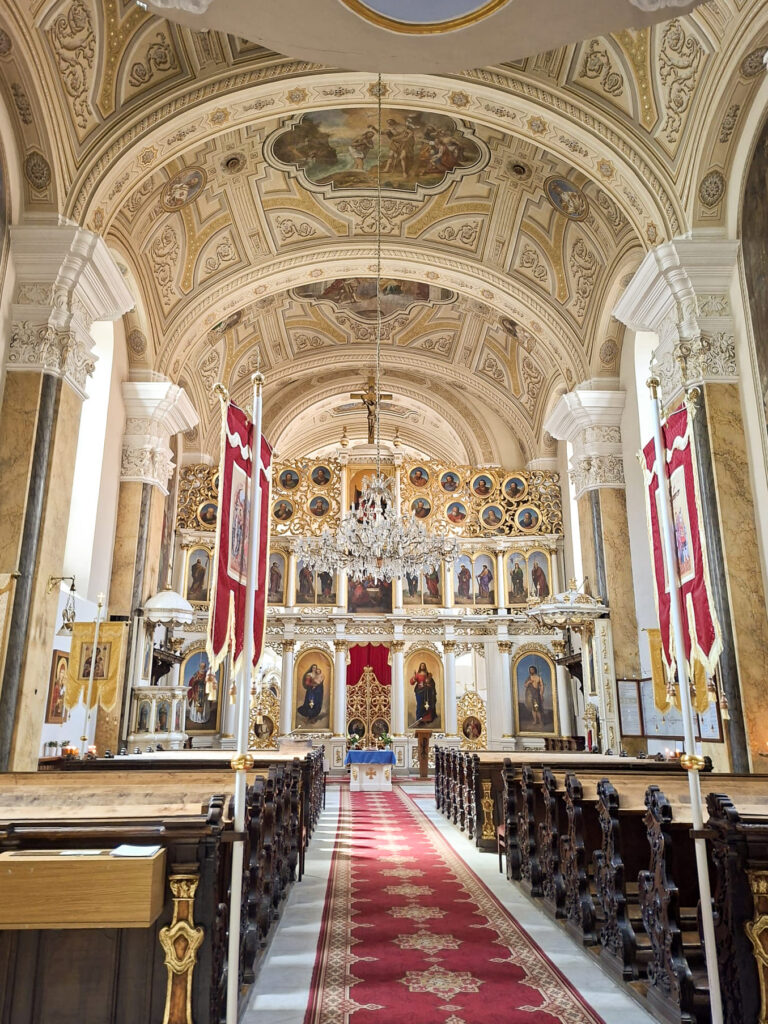
The cathedral contains three chapels and a crypt beneath it; beneath the altars in the side chapels are sarcophagi containing the relics of the blessed hieromartyrs Pavol Peter Gojdič OSBM and Vasil Hopko. In 2003, a faithful replica of the Shroud of Turin was placed in the cathedral; it also houses relics of the Holy Cross of Christ, St John the Baptist, St Stephen the First Martyr and other saints. In 2008, the Eparchy of Prešov was elevated to an archieparchy, Prešov became the seat of the Greek Catholic Metropolitan Church, and the Cathedral of St John the Baptist became the cathedral of the Archieparchy of Prešov. The church is open during services; to visit at other times, please contact the parish office.
Carpathian wooden path
We shall remain on the subject of religiosity and the Rusyns, and we shall do so by means of Carpathian Wooden Way. It showcases the unique sacred monuments of the Carpathians, which bring together the folk architecture, history, religion and culture of north-eastern Slovakia.
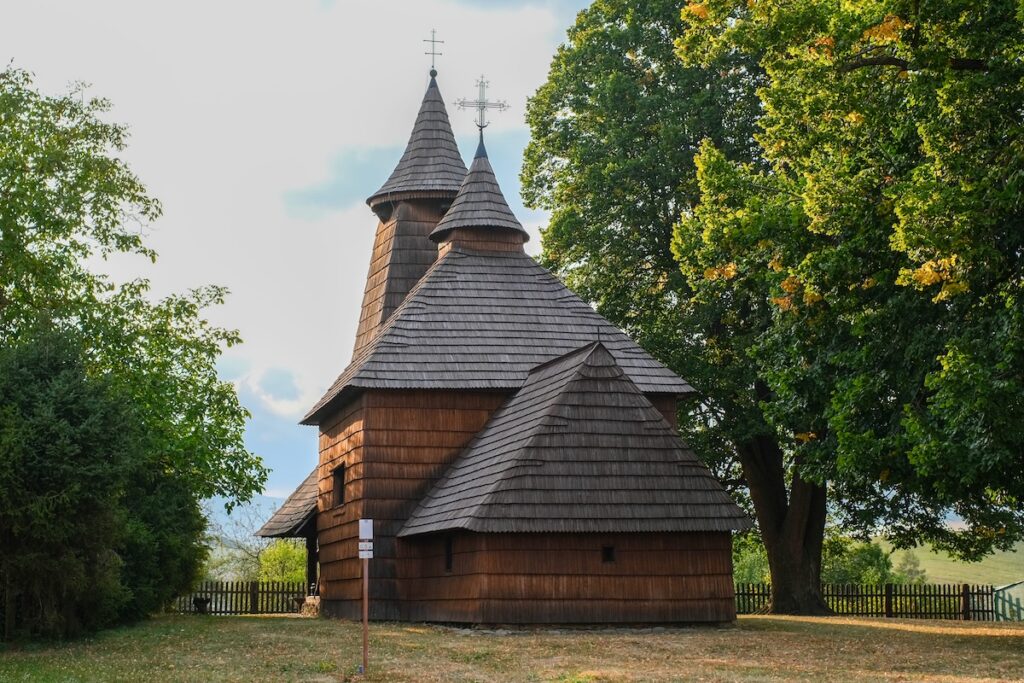
We will continue our journey via Bardejov until Svidník, so that we can visit several churches along the Carpathian Wooden Trail. The first of these will be The Greek Catholic Church of St Luke in Tročany, judging by the style of the church, it clearly dates from the turn of the 15th and 16th centuries at the latest. It was apparently brought from the nearby village of Rešov, as evidenced by the notches in the wooden beams and the commemorative inscription on the icon of the Crucifixion. In 1968, the church was declared a national cultural monument.
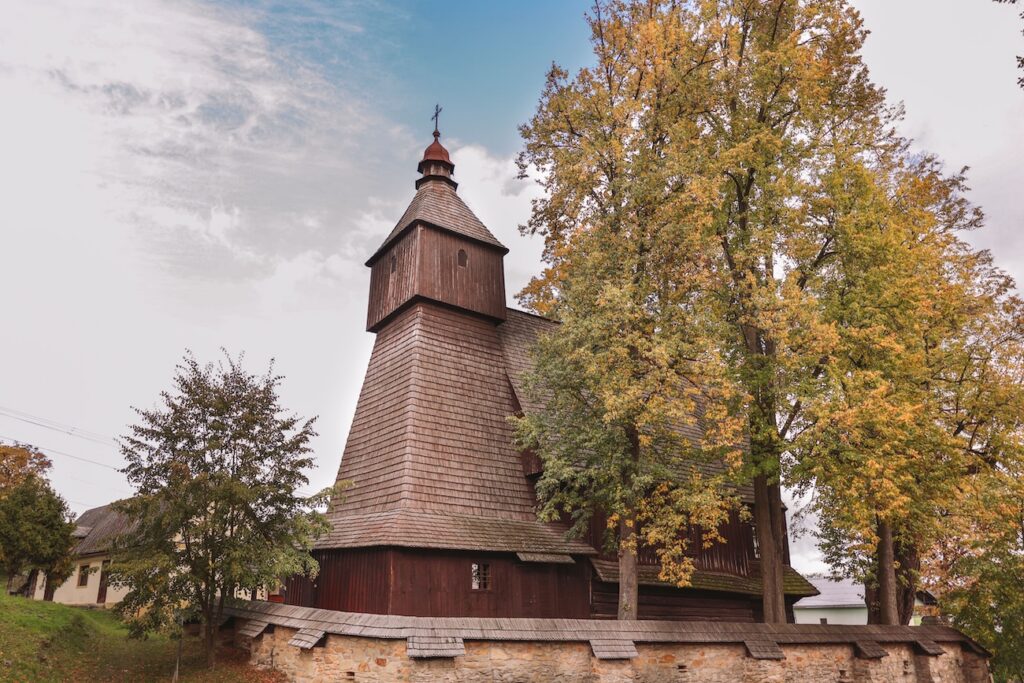
After visiting another wooden church, we’ll head to the village of Hervartov, where we’ll find The Roman Catholic Church of St Francis of Assisi. In 2008, it was inscribed on the UNESCO World Heritage List, along with seven other wooden churches. It is purely Gothic in character, and the interior walls of the church are now covered with unique painted decorations featuring figurative and plant motifs. With its two-part floor plan, high roof and other features both inside and out, it differs significantly from Rusyn wooden churches (Eastern Rite churches).
It’s just a stone’s throw from Hervartov to Bardejova, specifically to Bardejov Spa, where we will visit Museum of Folk Architecture. It is an open-air museum housing the oldest facility of its kind in Slovakia – it was opened as early as 1965. Spanning an area of 1.5 hectares, the ethnopark features 24 exhibition buildings showcasing the folk culture and architecture of two ethnic groups: the Slovak and Rusyn populations living in the Upper Šariš and Northern Zemplín regions.
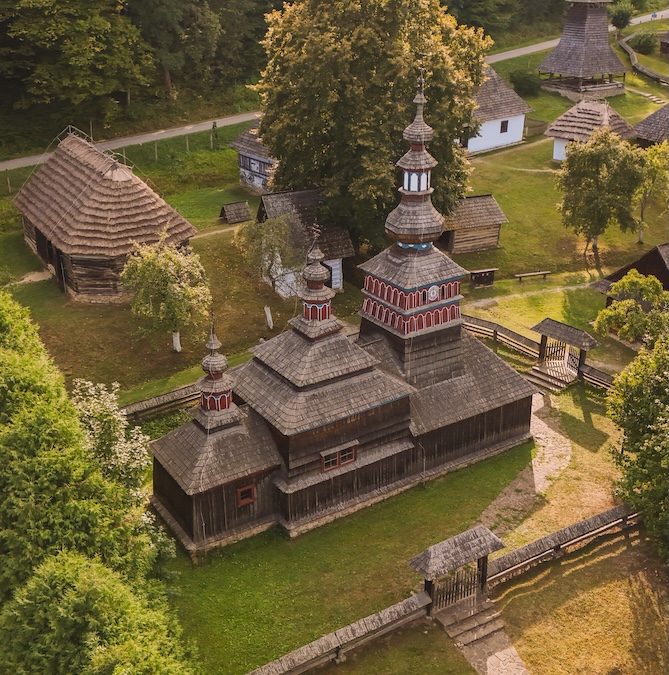
Along the Bardejov–Svidník route there are other wooden churches where we can stop on the way, for example, the Church of the Protection of the Most Holy Mother of God in the village of Jedlinka, or the wooden Orthodox Church of the Nativity of the Most Holy Mother of God in Hutka.
Open-air museum in Svidník
The final stop on our route is Museum of Ukrainian Culture in Svidník. It is one of the most significant open-air museums in north-eastern Slovakia. It covers an area of approximately ten hectares in the immediate vicinity of the Svidník amphitheatre. Through a combination of original and reconstructed buildings, it gives visitors an insight into the way of life of the Rusyns and Ukrainians who lived in Slovakia in past historical periods.
Visitors can learn about the traditional architecture, housing, farming, crafts and spiritual life of the region’s inhabitants. The individual buildings are arranged to create a picture of a typical village in north-eastern Slovakia.
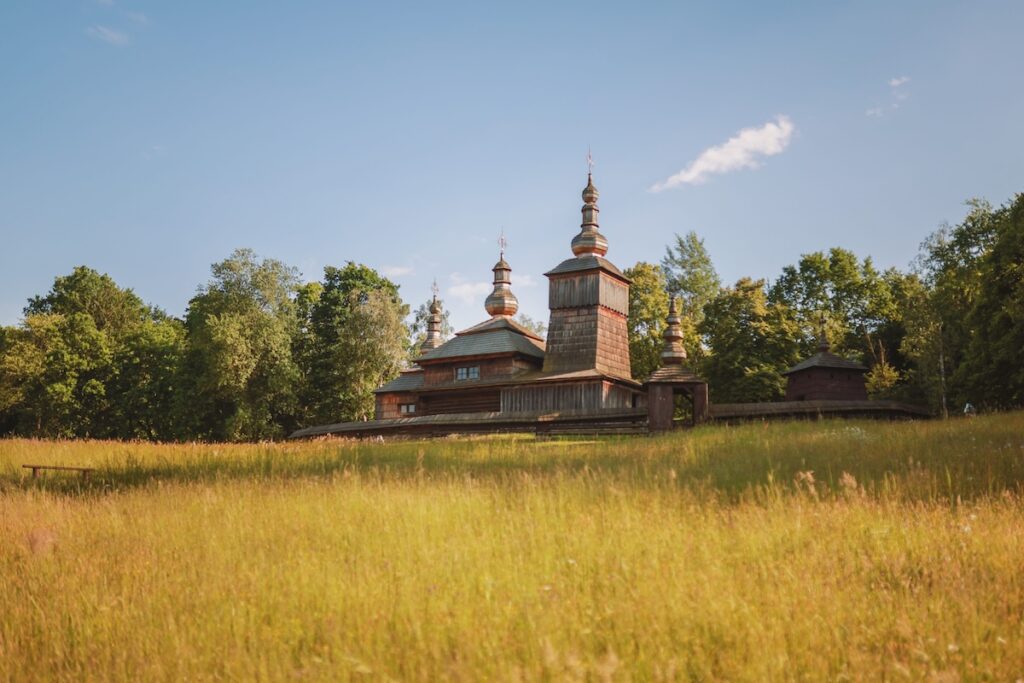
The exhibition centres on residential buildings representing the most common types of traditional architecture in the region. The buildings were relocated to the site from various villages, then professionally restored and furnished to reflect the original way of life of their inhabitants. One of the most valuable buildings in the open-air museum is a wooden Orthodox church dating from 1766, also known by its original name, Mergeška. The wooden Church of St Paraskeva from Nová Polianka is a significant example of traditional Eastern Orthodox sacred architecture. Its interior is richly decorated, offering an insight into the religious traditions and spiritual life of the Rusyns and Ukrainians in north-eastern Slovakia.
When our Bratislava resident returns to the pub via this route, perhaps he won’t need to consult a dictionary for every word in the dialect. And perhaps he’ll already know what a ‘cerkov’ is, and that in north-eastern Slovakia, several languages, cultures and religious traditions have developed side by side for centuries. That is precisely what makes Šariš so interesting. You don’t have to go abroad to hear a different language, get to know a different culture or step inside a church whose traditions are completely new to you. Sometimes all it takes is setting off from Bratislava heading east, and after a few hours you feel as though you’ve travelled a much greater part of the world.
And if, after all those churches, icons, museums, the Rusyn language and the Šariš dialect, you’re feeling a bit parched, feel free to return to where our cultural exploration began – to a pub amongst the locals. Because some differences are best explained over a beer, and „ta co?“ is probably the first lesson in the Šariš dialect that you’ll remember forever.
Source: OOCR RŠ
Source of photographs: OOCR RŠ