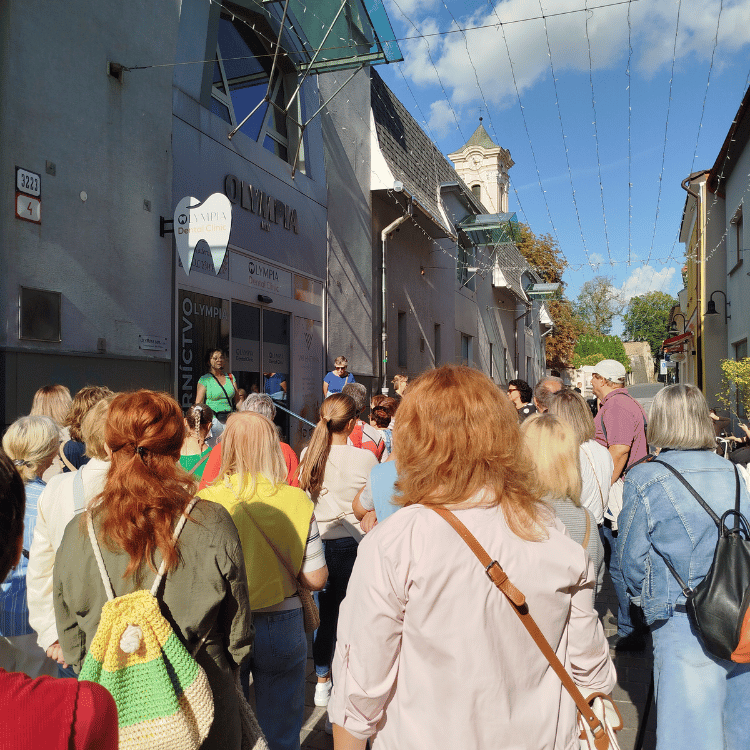
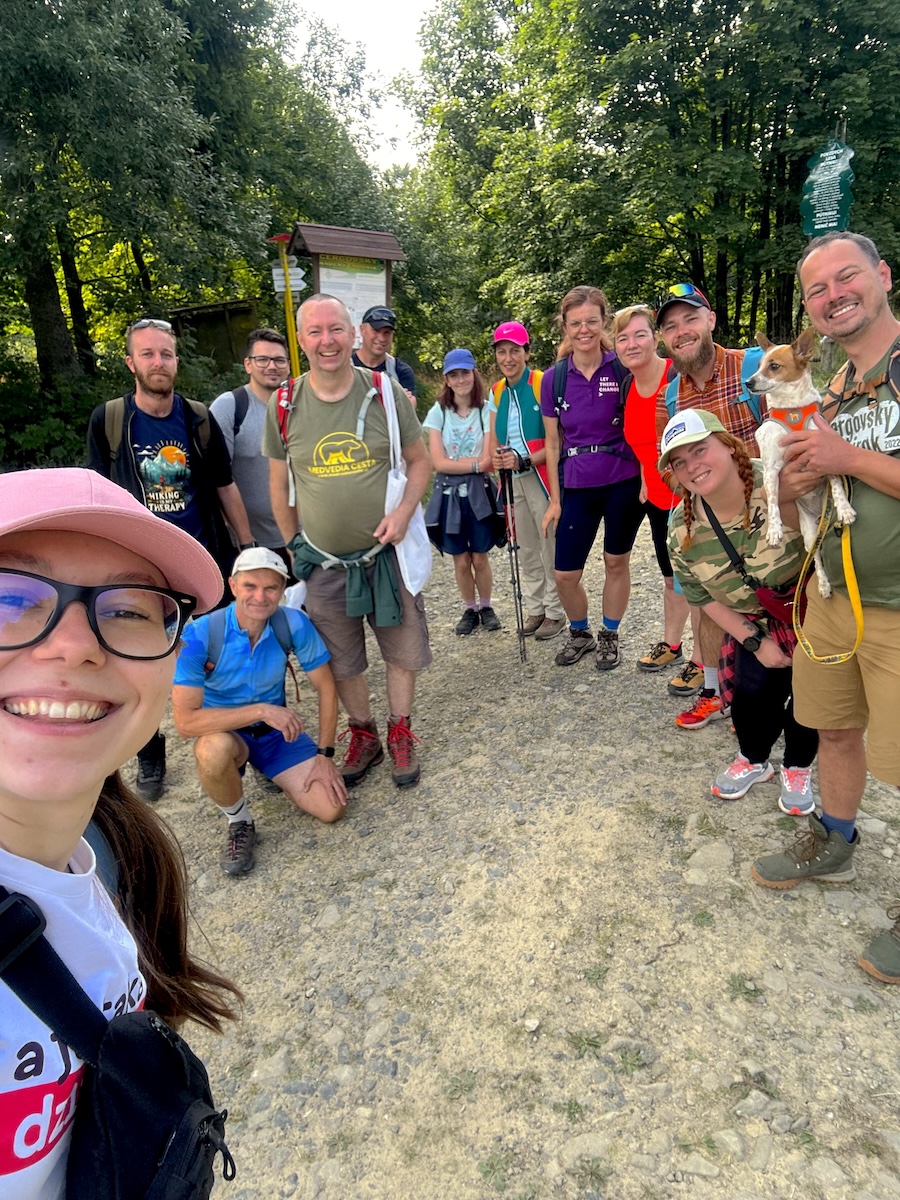
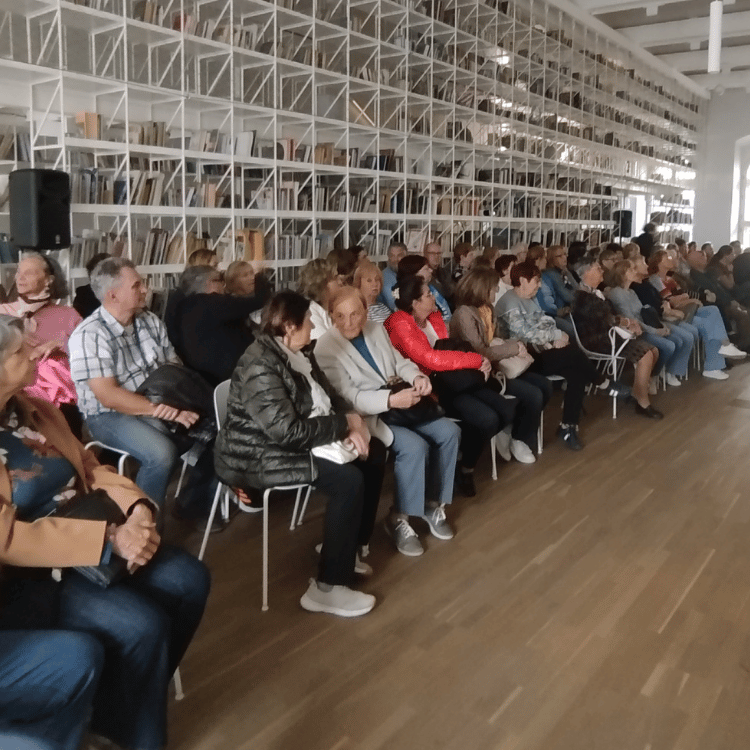
The October event in the series Discovering Prešov took place on Sunday 11.10.2026 and more than 80 participants were transported back in time to a now-defunct suburb the city of Prešov behind the former Upper Gate – Horný Hušták.
Visitors learnt about its history, the appearance of its streets and houses, and the lives of its inhabitants thanks to the commentary Andrey Sivanic and a rare collection of historical photographs and stories Martina Dudáš.
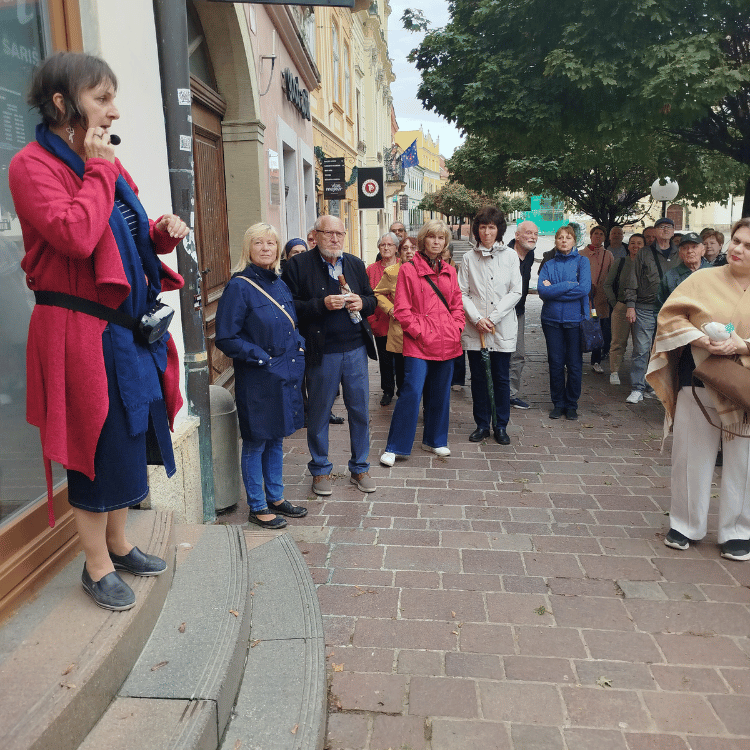
Horný Hušták – a lively suburb
Hušták was located north of the historic centre of Prešov, beyond the northern city gate, and was an important junction for trade routes coming from various directions (Levoča, Bardejov, Sabinov). Today, this area corresponds mainly to Námestie mieru and the surrounding area towards Vajanského Street.
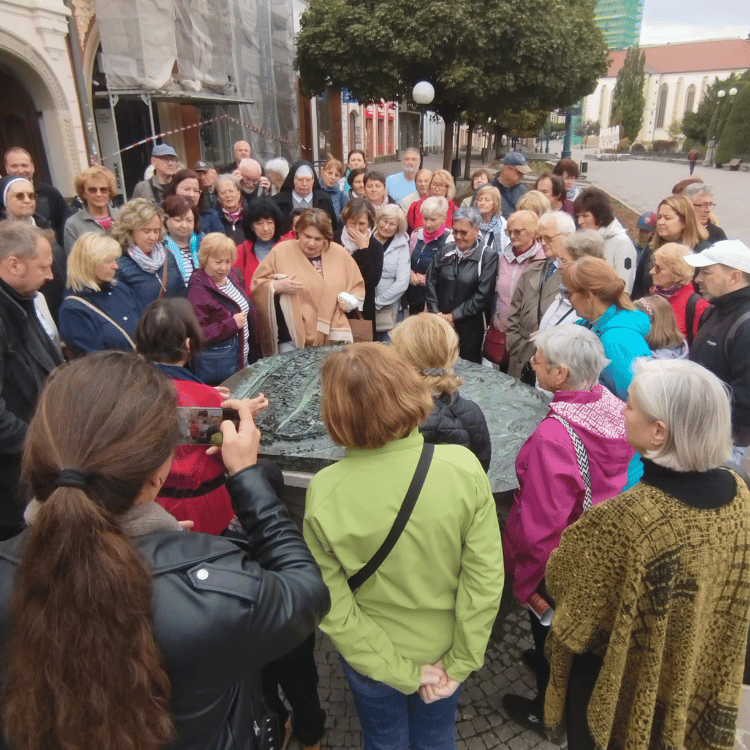
The exploration began with a walk through the town to 3D model of Prešov, where Andrea Sivaničová transported the participants back to a time when Horný Hušták was an integral part of the town’s life. Its main function was to serve as market square (in Hungarian Market Square), where regular markets, including horse markets. The model was used to visualise the area where Hušták was located.
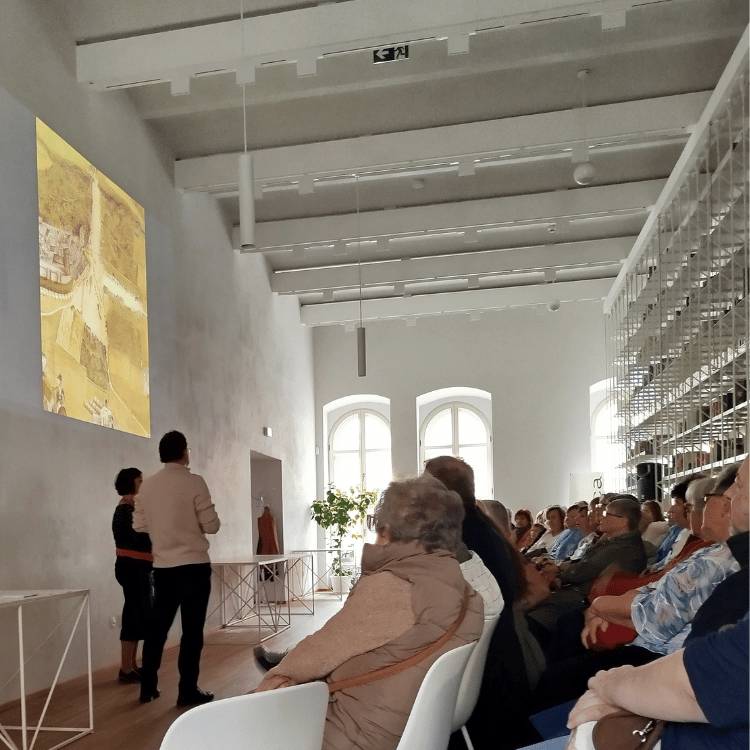
After a short walk, the procession moved on to Slovenská Street – to The P. O. Hviezdoslav Regional Library, where he took the floor Martin Dudáš, which explained how this suburb came into being as far back as the Middle Ages and what it looked like at the turn of the 19th and 20th centuries. Through historical context and period photographs, they were able to visualise the appearance of towns that have changed significantly or disappeared altogether over the decades.
Attention was focused on individual houses, their owners and tenants, as well as the former appearance of Námestie mieru, which is now home to the Prešov District Office. Memories of the past brought to life the everyday lives of the residents, trade and social life in this bustling spot.

Singer’s House, Lajoška and the horse markets
Among the interesting stops in the stories about Horný Hušták were Schmiedt’s ironworks, also known as Singer's House, whether Lajoška Pub. The discussion also touched on at the renowned stud farm and at the horse markets, which were among the defining features of the market of yesteryear.
Another interesting aspect of life in Hušták was local pubs. According to historical records, there were approximately seven or eight of them in this area. They served not only as places for refreshments and socialising, but also for celebrating successful trades at the market. If someone managed to sell well or strike a favourable deal at the market, they would often head to the pub to celebrate their success. Such a celebration was called Oldomáš.
Jozef Gregor Tajovský and Tatra Banka
The Tatra Bank branch building, which was situated in Hušták, also deserved special attention. It was here that he served as director Jozef Gregor Tajovský, a well-known Slovak writer, playwright and leading figure of Slovak realism. This story, too, served as a reminder that the history of Prešov’s streets is often linked to prominent figures in Slovak cultural and social history.
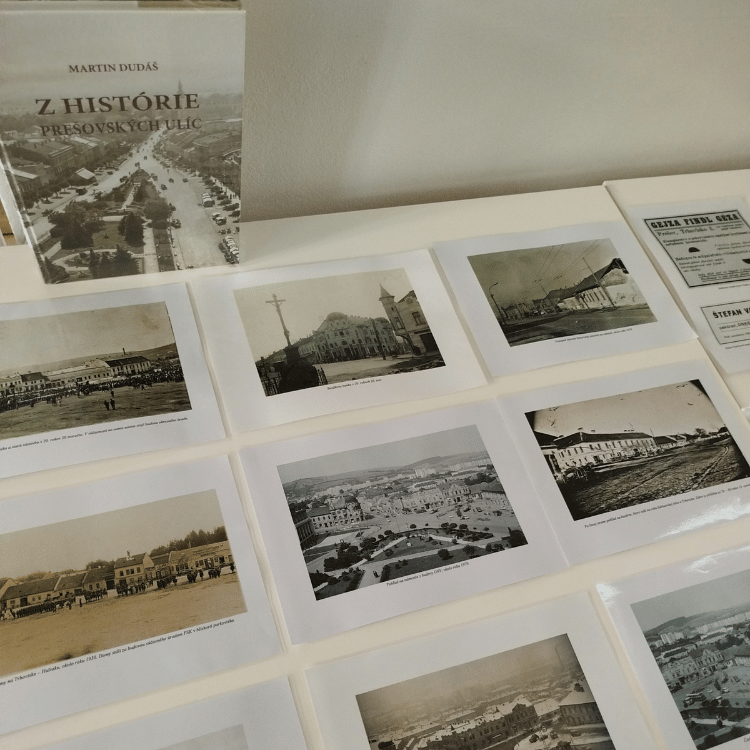
Martin Dudáš’s historical photographs enabled visitors to compare how this area used to look with how it looks today, and to better visualise the setting in which the stories of Prešov’s former residents unfolded.
Historical photographs have brought the past to life
Martin Dudáš He presented further historical photographs and stories linked to Horný Hušták. Those interested were able to hear his account set within a broader historical context and gain an insight into the town as it once was – a picture we now know mainly from old photographs and the accounts of eyewitnesses.
The event also included a book sale Memories of Prešov’s older residents a From the history of Prešov’s streets, thanks to which visitors were able to take home further insights into Prešov’s past.
Thank you for exploring with us
Sunday Discovering Prešov has shown us once again that even places that have changed beyond recognition have their own stories. Historical photographs, memories and the accounts of experts help us to preserve these stories for future generations and to discover the city from a new perspective.
We would like to thank everyone who has joined us and who, through their participation, is proving that exploring Prešov is still worthwhile. November will be marked by a festive atmosphere. We’ll be visiting Prešov Cemetery, where we’ll focus our attention particularly on the gravestones, which are works of art created by a master sculptor from Prešov. Dušan Pončák.
The event was organised with financial support from the Ministry of Tourism and Sport of the Slovak Republic.

Source: OOCR RŠ
Source of photographs: OOCR RŠ